 English
  French
  German
  Spanish
  Portuguese
  Dutch
Dutch  Italian
  Russian
  Chinese
  Japanese
  Korean
  Indonesian
  Thai
Thai  Vietnamese
  Arabic
  Turkish
  Hebrew
  Hindi
Hindi 
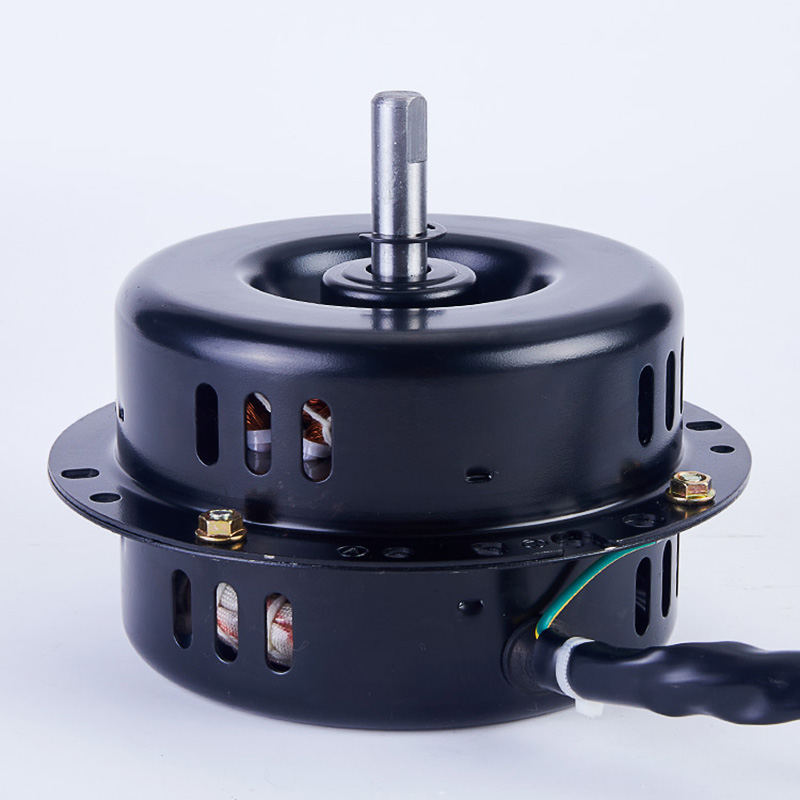
In large industrial scenarios such as iron and steel, mining, and chemical engineering, AC motors with power ranging from several hundred kilowatts to several megawatts are widely used. However, their starting process rarely adopts the “full-voltage starting” method directly; instead, soft starters are generally equipped. Why can’t such large AC motors start by direct power-on like small household motors? What crucial role does the soft starter play in the starting process?
The core reason why large industrial AC motors need soft starters lies in the matching contradiction between their own starting characteristics and the industrial power supply system. Soft starters solve the multiple hazards caused by full-voltage starting by gently adjusting the starting parameters, which can be analyzed from three dimensions: the motor itself, the power supply system, and the production process.
1. Suppress Starting Inrush Current and Protect Motor Windings and Insulation
The starting current (also known as inrush current) of an AC motor is 5-7 times its rated current. This characteristic stems from the electromagnetic principle at the moment the motor starts: when starting, the rotor has not yet rotated, the speed at which the stator windings cut the magnetic field is zero, and the back electromotive force cannot be established. At this time, the windings only rely on their own resistance to limit the current, and the DC resistance of the motor windings is usually extremely small, leading to a sharp surge in current. For small motors (such as a few hundred watts of fan motors), this short-term inrush current will not cause obvious damage. However, the winding wires of large motors are thicker and have more turns, and the huge inrush current will generate strong electric force, which may cause winding deformation and local breakdown of the insulation layer. At the same time, the thermal effect of the current will cause the winding temperature to rise instantaneously, accelerating insulation aging and shortening the service life of the motor.
Soft starters gradually increase the voltage applied to the motor stator windings through power electronic components such as thyristors and IGBTs, making the rotor speed rise slowly, and the back electromotive force is gradually established accordingly. Thus, the starting current is controlled within the range of 1.5-2.5 times the rated current, avoiding the damage to the motor structure and insulation caused by current impact.
2. Stabilize Power Grid Voltage and Avoid Affecting the Operation of Other Equipment
The full-voltage starting current of large industrial AC motors can reach thousands or even tens of thousands of amperes. Such a huge current will cause a significant voltage drop on the impedance of the power supply line. According to Ohm’s law, the line voltage drop ΔU = I × R (I is the starting current, R is the line impedance). A large voltage drop in a short time will cause a sudden drop in the grid voltage of the entire workshop or even the factory area. This voltage fluctuation will cause serious impacts on other equipment in the same power grid: precision instruments may have measurement errors or shut down due to unstable voltage; lighting systems will dim instantly; other motors may stall due to insufficient voltage, and then burn out the windings. In industrial scenarios with sensitive loads (such as PLC control systems and frequency converters), severe fluctuations in grid voltage may also cause control system disorders and trigger production accidents.
By smoothly adjusting the output voltage, the soft starter makes the starting current increase slowly, effectively reducing the impact of the starting current on the power grid, controlling the line voltage drop within the allowable range (usually not exceeding 10%), and ensuring the stability of the grid voltage and the normal operation of other electrical equipment.
3. Alleviate Mechanical Impact and Protect Transmission System and Production Process
Large AC motors usually drive heavy loads such as fans, water pumps, crushers, and conveyors. During full-voltage starting, the motor speed jumps from a standstill to the rated speed instantaneously, causing strong mechanical impact on the load equipment. This impact acts on transmission components such as couplings, reducers, and bearings, causing severe wear, loosening, or even breakage of the components, increasing equipment maintenance costs and downtime. At the same time, mechanical impact will also affect the stability of the production process: for example, in chemical production, the sudden start of a water pump may cause a sudden increase in pressure in the pipeline, leading to pipeline rupture or medium leakage; in mining, the instantaneous impact of a crusher may cause material blockage and affect production efficiency.
The soft starter makes the motor speed rise smoothly from 0, and the load equipment starts slowly accordingly, avoiding the occurrence of mechanical impact, prolonging the service life of the transmission system, and ensuring the continuity and stability of the production process.
Summary
The soft starter of large industrial AC motors is not a dispensable auxiliary equipment, but a core device to solve the matching contradiction between the motor starting characteristics and the industrial system. Through the three major functions of suppressing current impact, stabilizing power grid voltage, and alleviating mechanical impact, it not only protects the safe operation of the motor and related equipment, but also ensures the stability of the production process. It is an important guarantee for the safe and efficient operation of AC motors in large industrial scenarios.
