English
  French
  German
  Spanish
  Portuguese
  Dutch
Dutch  Italian
  Russian
  Chinese
  Japanese
  Korean
  Indonesian
  Thai
Thai  Vietnamese
  Arabic
  Turkish
  Hebrew
  Hindi
Hindi 

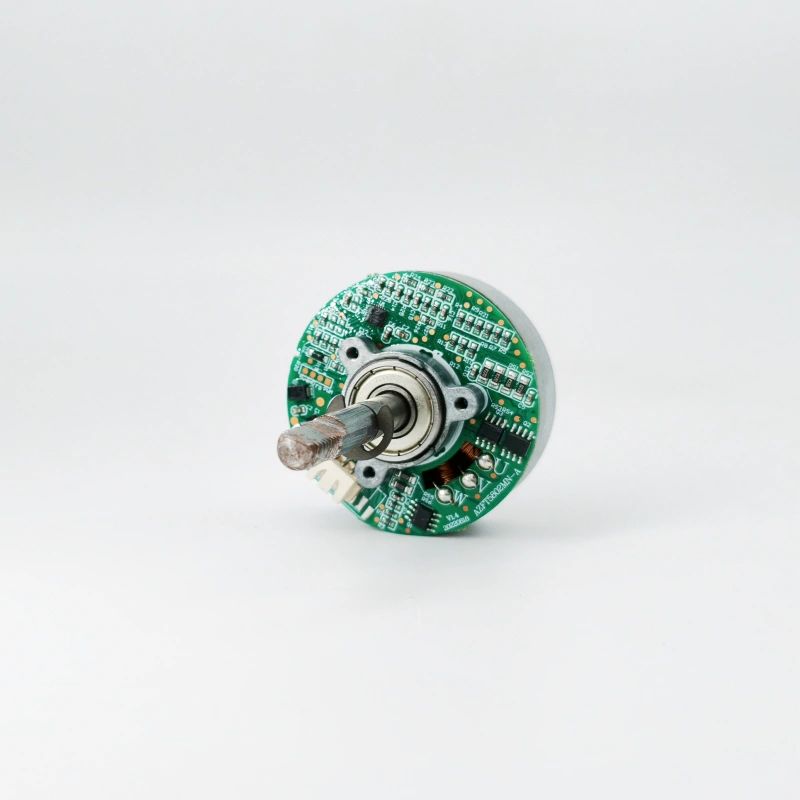
Question: What are the main reasons for frequent speed fluctuations (speed rising and falling abruptly) of DC motors during operation, and what targeted measures should be taken for troubleshooting and resolution?
Answer:
Speed fluctuation is a typical fault in the operation of DC motors. Its essence lies in the imbalance between the output torque of the motor and the load torque, or abnormalities in the speed regulation system and mechanical transmission parts. Troubleshooting should be carried out one by one from three aspects: electrical system, mechanical structure, and regulating device. The specific reasons and solutions are as follows:
I. Electrical System Failures: Core Inducers of Speed Fluctuations
Firstly, electrical system failures are one of the core reasons for speed fluctuations. On the one hand, unstable power supply. The speed of a DC motor is proportional to the armature voltage. If the DC voltage input to the armature has problems such as excessive ripple or instantaneous voltage drop, it will directly cause the speed to fluctuate accordingly. For example, aging filter capacitors or damaged rectifier diodes in the rectifier device will make the DC voltage after AC rectification contain a large number of AC components, resulting in unstable armature current and further causing speed fluctuations. At this time, an oscilloscope should be used to detect the voltage across the armature, replace aging filter capacitors and damaged diodes, and check whether the power cables are in good contact, tighten the terminal blocks to avoid uneven voltage loss due to excessive contact resistance.
On the other hand, faults in the armature winding or field winding. Local short circuits, open circuits of the armature winding, or leakage caused by damaged insulation layers of the winding will lead to uneven distribution of armature current and unstable output torque; problems such as poor contact and turn-to-turn short circuits in the field winding will cause changes in the excitation flux. According to the DC motor speed formula n=(U-IaRa)/(CeΦ) (where U is the armature voltage, Ia is the armature current, Ra is the armature resistance, Ce is the motor constant, and Φ is the excitation flux), fluctuations in the flux Φ will directly cause changes in the speed n. During troubleshooting, a megohmmeter should be used to detect the insulation resistance of the winding, a multimeter to check for short circuit and open circuit faults, repair or replace the damaged winding, and clean the dust and oil stains on the surface of the winding to avoid degradation of insulation performance.
II. Mechanical Structure Abnormalities: Key Factors Indirectly Causing Speed Fluctuations
Secondly, abnormalities in the mechanical structure can indirectly lead to speed fluctuations. On one hand, deviations in the transmission mechanism. For example, loose or slipping belts in belt transmission, and excessive wear or backlash in gear transmission will make it impossible for the power output by the motor to be stably transmitted to the load, resulting in alternating “idling” and “sudden load changes”, which manifest as speed fluctuations. When solving this problem, adjust the belt tension, replace worn belts and gears, apply lubricating oil to the gear meshing area, and reduce the transmission backlash. On the other hand, faults in motor bearings or rotor imbalance. Wear and lack of oil in bearings will lead to increased and unstable rotational resistance of the rotor; deviation of the rotor center of gravity will cause vibration, which in turn affects speed stability and is accompanied by slight noise. It is necessary to disassemble the motor to inspect the bearings, replace worn bearings and add special lubricating oil, and perform dynamic balance correction on the rotor to eliminate vibration hazards.
III. Speed Regulating Device Failures: Exclusive Problems of Controllable DC Motors
Finally, failures of the speed regulating device are important inducers of speed fluctuations in controllable DC motors. For series-excited and compound-excited DC motors, poor contact of the speed-regulating resistor and aging of internal electronic components of the speed governor will lead to unstable resistance of the armature circuit or field circuit, changing the motor speed; for brushless DC motors, abnormal drive signals output by the controller and inaccurate positioning of the Hall sensor will cause deviations in commutation timing, resulting in unstable motor operation. During troubleshooting, if it is a mechanical speed-regulating device, clean the oxide layer on the contacts of the speed-regulating resistor and replace the aging speed governor; if it is a brushless DC motor, detect the Hall sensor signal, adjust the installation position of the sensor, and replace the faulty controller module to ensure accurate matching between the drive signal and the rotor position.
IV. Load Factors and Troubleshooting Process: Auxiliary Resolution and Efficient Localization
In addition, load fluctuations can also cause speed changes. It is necessary to confirm whether the load has instantaneous overload or uneven load, optimize the load operation state, and avoid the impact of load shock on the motor speed. During troubleshooting, the sequence of “electrical first, then mechanical; static first, then dynamic” can be adopted. First, disconnect the load to detect whether the no-load speed of the motor is stable. After eliminating the load factor, check the power supply, windings, transmission structure and speed-regulating device one by one to efficiently locate the fault point. Through targeted treatment, the speed fluctuation problem of DC motors can be effectively solved, the operation accuracy of the equipment can be restored, and the service life of the motor can be prolonged.