 English
  French
  German
  Spanish
  Portuguese
  Dutch
Dutch  Italian
  Russian
  Chinese
  Japanese
  Korean
  Indonesian
  Thai
Thai  Vietnamese
  Arabic
  Turkish
  Hebrew
  Hindi
Hindi 
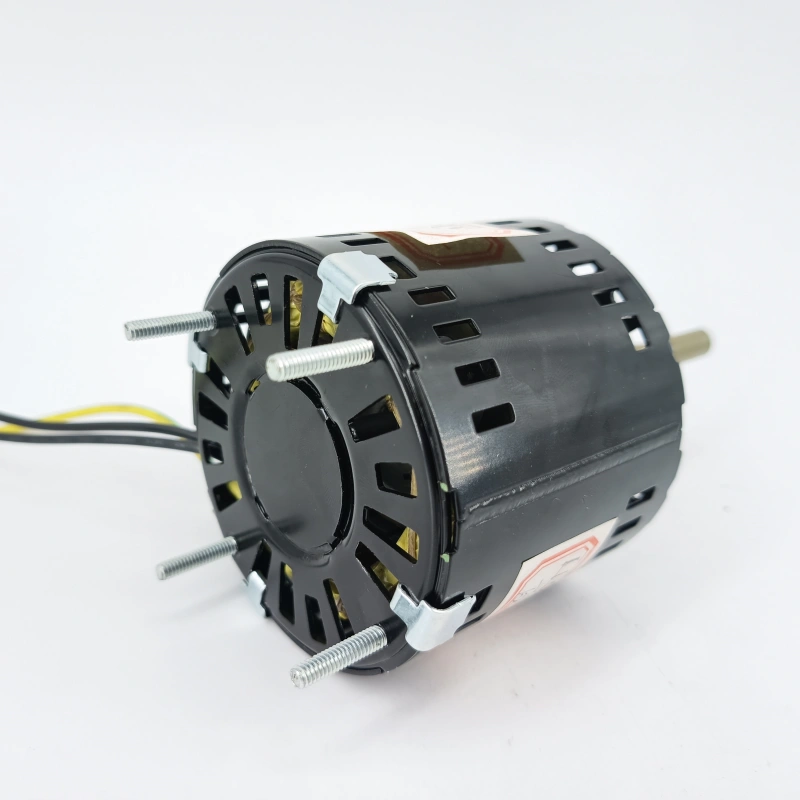
In industrial production sites, the ammeter pointer of AC motors (especially asynchronous motors) often deflects sharply when starting, showing an “inrush current” far exceeding the rated current. The starting current of some small and medium-sized motors can reach 5-7 times the rated value, and that of large high-voltage motors is even higher. This phenomenon not only troubles equipment operation and maintenance personnel but also hides potential safety hazards. To answer this question, we need to start from the working principle of AC motors and analyze the harms and countermeasures in combination with actual working conditions.
1. Core Causes of Excessive Starting Current
The starting characteristics of AC asynchronous motors are closely related to the “rotating magnetic field” and “slip ratio”. When the motor is stationary, the rotor speed is 0, and the slip ratio s=1 (slip ratio s=(synchronous speed – rotor speed)/synchronous speed). At this time, the speed at which the rotor conductor cuts the rotating magnetic field reaches the maximum value, and the rotor induced electromotive force and induced current also reach the maximum accordingly. According to the principle of electromagnetic induction, the magnetic field generated by the rotor current will interact with the stator magnetic field. To maintain the magnetic field balance, the stator will automatically increase the current to offset the influence of the rotor magnetic field, eventually leading to a sharp increase in the stator starting current.
From the perspective of the circuit, the extremely low equivalent impedance of the motor at startup is another key factor. In the static state, the stator winding of the motor can be regarded as a series circuit of “resistance + leakage reactance”. At this time, the inductive reactance of the winding is at the minimum value because the rotor does not rotate, and the resistance itself is small. According to Ohm’s law I=U/Z, under the rated voltage, the decrease of impedance Z directly leads to a significant increase in current I. In addition, the rotor bars of cage-type asynchronous motors are made of cast aluminum or copper bar structure, and the rotor circuit resistance is small at startup, which further aggravates the current amplification effect.
2. Main Harms of High Starting Current
Excessive starting current will have negative impacts on the power grid, the motor itself and related equipment. For the power grid, the short-term high current surge will cause the grid voltage to drop instantaneously, which may cause abnormal operation of other equipment in the same power grid (such as precision instruments, PLC control systems), and even trigger tripping and power failure. For the motor, the excessive current will make the stator winding bear a huge electric force. Frequent starting for a long time may lead to aging and damage of the winding insulation layer, causing inter-turn short circuit. At the same time, the Joule heat generated by the current will cause the winding temperature to rise sharply, shortening the service life of the motor.
For industrial production, the starting surge may also affect the stability of the mechanical system. The starting torque fluctuation corresponding to the high current will make the connection part between the motor and the load (such as fans, water pumps, conveyors) bear impact load, leading to mechanical failures such as loose couplings and gear wear, and increasing equipment maintenance costs. In flammable and explosive scenarios (such as chemical industry, coal mines), the starting current may cause electric sparks, posing a safety hazard.
3. Effective Suppression Strategies in Industrial Scenarios
According to different power levels and working condition requirements, the commonly used suppression methods in industry can be divided into two categories: “step-down starting” and “soft starting”. For small and medium-sized asynchronous motors (usually below 55kW), step-down starting is an economical and practical choice. The core idea is to reduce the stator voltage at startup to reduce the starting current. Common methods include star-delta (Y-Δ) starting, autotransformer step-down starting and reactor step-down starting. Among them, star-delta starting is the most widely used. During starting, the stator winding is connected in a star shape, so that the voltage of each phase winding drops to 1/√3 of the rated value, and the starting current is then reduced to 1/3 of that of direct starting. After the motor speed rises, it is switched to delta connection to restore the rated voltage operation.
For large motors (above 100kW) or scenarios with high requirements for starting smoothness (such as elevators, precision machine tools), soft starters and frequency converters are better solutions. The soft starter uses the phase control of silicon controlled rectifiers (SCR) to make the stator voltage rise smoothly from low to high. The starting current can be controlled at 2-3 times the rated value, avoiding sudden rise and fall of voltage. At the same time, it has overcurrent and overload protection functions, and is suitable for various load characteristics. The frequency converter controls the motor start by changing the power supply frequency. During starting, the frequency increases gradually from 0, and the speed rises smoothly synchronously. The starting current can be limited within the rated value, and it can also realize the speed regulation function, which kills two birds with one stone in scenarios requiring variable speed operation (such as fan frequency conversion speed regulation and energy saving).
In addition, auxiliary measures such as “step-by-step starting” or “load unloading starting” can be adopted for specific loads. For example, for heavy-load equipment such as belt conveyors, the load is cut off by a clutch before starting, and the load is engaged after the motor reaches the rated speed; for compressor equipment, the bypass valve can be used to unload the cylinder pressure, reduce the starting resistance, and indirectly reduce the starting current.
In conclusion, the excessive starting current of AC motors is an inherent phenomenon determined by their electromagnetic characteristics, but its harms can be effectively controlled through scientific starting methods. In industrial scenarios, it is necessary to combine factors such as motor power, load characteristics and power grid capacity to select an “economical and applicable” or “accurate and controllable” suppression scheme, so as to ensure equipment safety and improve production stability.
