English
  French
  German
  Spanish
  Portuguese
  Dutch
Dutch  Italian
  Russian
  Chinese
  Japanese
  Korean
  Indonesian
  Thai
Thai  Vietnamese
  Arabic
  Turkish
  Hebrew
  Hindi
Hindi 

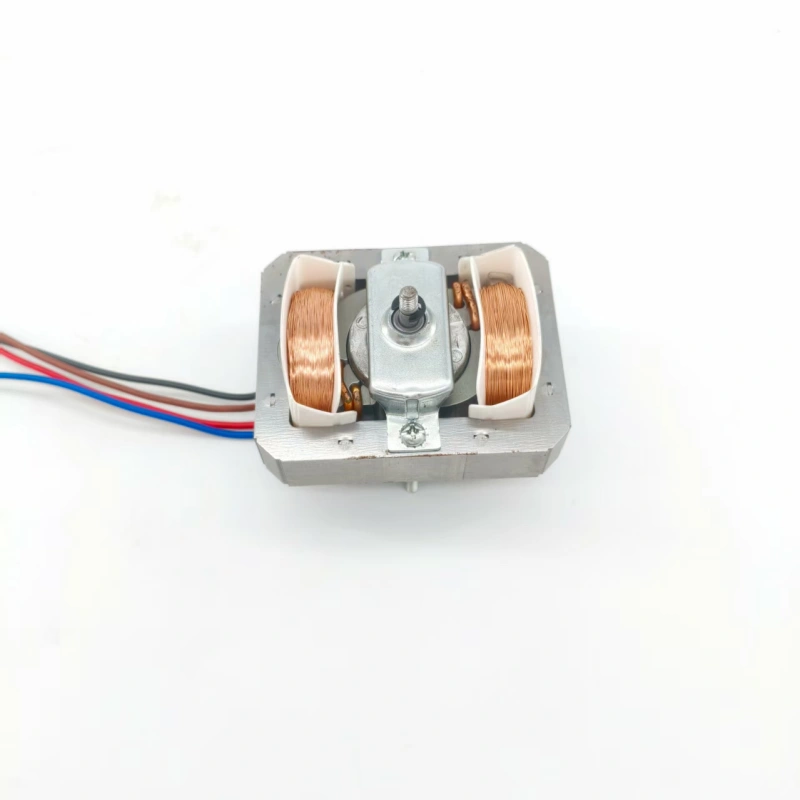
After using a household range hood for 2-3 years, problems such as incomplete oil smoke absorption, lingering oil smoke in the kitchen during cooking, and even oil dripping from the bottom of the machine polluting the countertop occur more and more frequently. What are the specific causes of these issues? How to solve them targetedly to restore the range hood’s good smoke exhaust performance?
Answer: The problems of incomplete oil smoke absorption and oil leakage of range hoods are not caused by a single factor. The core roots are mostly “air duct blockage”, “component aging”, “improper installation” or “poor usage habits”. By addressing these causes targetedly, the smoke exhaust performance of the range hood can be effectively restored. The specific analysis and solutions are as follows:
1. Core Cause 1: Oil Accumulation and Blockage in Filter Screen and Air Duct
The most common cause is long-term lack of cleaning of the filter screen and air duct, leading to oil accumulation and blockage. The core function of a range hood is to intercept oil mist in the oil smoke through the filter screen and then discharge the waste gas through the air duct. If not cleaned for a long time, a thick layer of oil dirt will accumulate on the surface of the filter screen, which not only narrows the air intake channel and greatly reduces the oil smoke absorption efficiency, but also makes some unintercepted oil mist adhere and solidify in the air duct, gradually blocking the air duct and causing poor smoke exhaust and oil smoke backflow. The oil leakage problem is also mostly caused by excessive oil accumulation in the filter screen and air duct that exceeds its bearing capacity, leading to dripping through gaps in the machine body or poor oil circuit backflow.
The key to solving this problem lies in regular deep cleaning. Daily, one should develop the habit of wiping off floating oil on the filter screen surface every week, and perform deep cleaning every 3-6 months: first, remove the detachable filter screen, soak it in warm water for 10-15 minutes, add neutral detergent or special degreaser, and gently scrub the oil dirt in the filter screen pores with a soft brush; at the same time, open the range hood cover, wipe the oil accumulation on the inner wind wheel and air duct inner wall with a cloth dipped in degreaser, and be careful not to rinse the motor part directly with water to prevent short circuit. After cleaning, ensure that the filter screen and internal components are completely dry before reinstalling them, which can effectively restore the smoothness of the air intake and exhaust channels.
2. Core Cause 2: Wind Wheel Aging or Dynamic Balance Disorder
Secondly, wind wheel aging or dynamic balance disorder is also an important inducing factor. The wind wheel is the core component that generates suction for the range hood. Long-term high-speed rotation and contact with high-temperature oil smoke will cause blade deformation and uneven oil dirt adhesion on the surface, leading to dynamic balance disorder of the wind wheel. While making abnormal noise during rotation, the suction is greatly attenuated, making it impossible to effectively absorb and discharge oil smoke. In addition, if the motor bearing of the wind wheel lacks lubrication for a long time, the rotation speed will also decrease, further reducing the smoke exhaust efficiency. When a large amount of oil dirt accumulated on the wind wheel falls off, it may form oil dripping.
Handling such problems requires checking the wind wheel status: if the wind wheel only has uneven oil dirt adhesion, it can be restored through deep cleaning; if the blades are deformed or damaged, contact after-sales service to replace the wind wheel of the same model. At the same time, a small amount of special lubricating oil can be regularly added to the motor bearing to ensure the high-speed and stable rotation of the wind wheel. It should be noted that the disassembly and installation of the wind wheel require professional operations to avoid component damage caused by self-disassembly.
3. Core Cause 3: Improper Installation or Duct Problems
Furthermore, improper installation or duct problems are easily overlooked. The installation height of the range hood, the length and direction of the smoke exhaust duct directly affect the smoke exhaust effect. If installed too high, exceeding the recommended air intake height of the machine body (usually 65-75cm from the stove), the oil smoke will diffuse before being absorbed; if the smoke exhaust duct is too long (more than 3 meters) or has too many bends (more than 2), it will increase the smoke exhaust resistance and lead to poor smoke exhaust; in addition, if the connection between the duct and the machine body, as well as the external wall air outlet is not tight, oil smoke leakage will occur. If the check valve at the end of the duct is stuck by oil dirt and cannot be fully closed, it will also cause external oil smoke backflow.
For installation and duct problems, the following adjustments can be made: re-calibrate the height of the range hood to ensure it meets the requirements of the product manual; shorten the length of the smoke exhaust duct and reduce bends. If bends are unavoidable, use a large-diameter duct to reduce resistance; check the duct connections and reinforce the seal with sealant or sealing tape; regularly clean the oil dirt on the check valve to ensure it opens and closes flexibly, and replace the check valve if necessary.
4. Core Cause 4: Poor Usage Habits
Finally, poor usage habits will aggravate the problem. Some users are used to turning on the range hood only when a large amount of oil smoke is generated during cooking, or turning it off immediately after cooking, which causes the oil smoke diffused in the early stage to not be absorbed, and the residual oil smoke in the duct will condense into oil dirt; in addition, a large amount of oil smoke generated by frequent stir-frying during cooking, if it exceeds the rated smoke exhaust volume of the range hood, will also result in incomplete absorption.
Developing correct usage habits can effectively alleviate the problem: turn on the range hood 1-2 minutes in advance before cooking, and continue to run it for 3-5 minutes after cooking to ensure that the residual oil smoke in the duct is completely discharged; select the appropriate gear according to the cooking method, and turn on the high gear when stir-frying to enhance suction.
5. Summary: Core Points for Problem Solving
In summary, the core problems of incomplete oil smoke absorption and oil leakage of range hoods are mostly related to insufficient cleaning, component aging, improper installation and poor usage habits. By performing regular deep cleaning, checking and replacing aging components, calibrating installation parameters and developing correct usage habits, the range hood can restore good performance and keep the kitchen environment clean and fresh. If the problem is still not solved after the above treatments, it may be that the core components such as the motor are seriously damaged. It is recommended to contact professional after-sales service for maintenance or consider replacing with a new model.