English
  French
  German
  Spanish
  Portuguese
  Dutch
Dutch  Italian
  Russian
  Chinese
  Japanese
  Korean
  Indonesian
  Thai
Thai  Vietnamese
  Arabic
  Turkish
  Hebrew
  Hindi
Hindi 

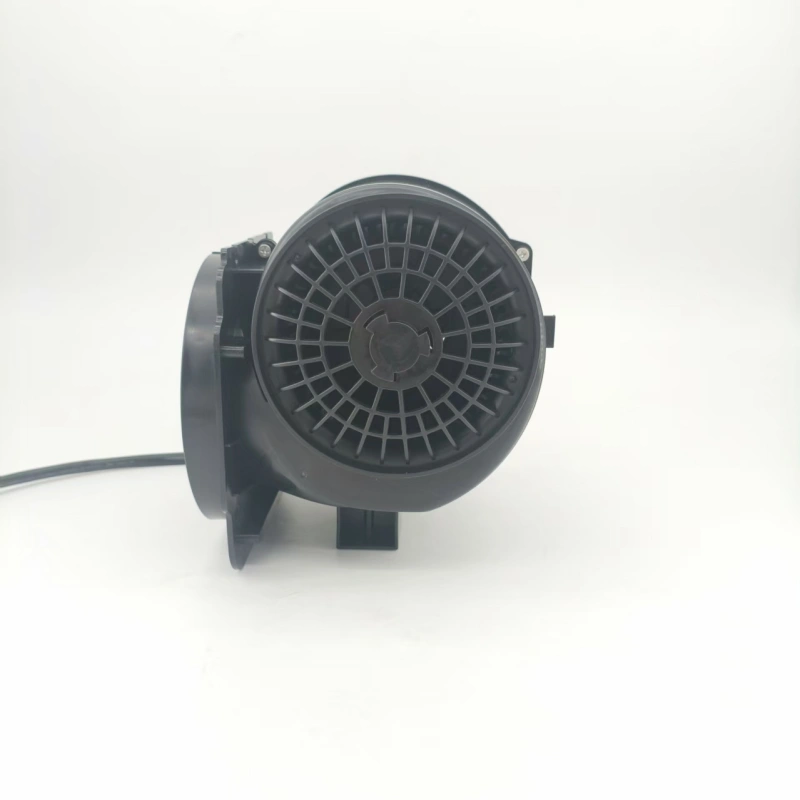
In the wave of industrial production transforming towards “greenization and intelligence”, motors, as the “power core” of various equipment, their technological upgrading is directly related to production efficiency, energy consumption and environmental protection standards. Among them, high-efficiency and energy-saving motors, relying on their significant performance advantages, have gradually replaced traditional motors to become the market mainstream, and are even regarded as the core driver for promoting industrial upgrading. Behind this phenomenon lies the driving force of policy guidance, the value enhancement brought by technological breakthroughs, and more importantly, it meets the core demand of enterprises for cost reduction and efficiency improvement.
Policy impetus and environmental protection pressure have laid a solid foundation for the popularization of high-efficiency and energy-saving motors. With the global energy crisis and the proposal of the “dual carbon” goals, countries around the world have successively included energy-saving motors in key support areas. China has clearly stipulated that since 2023, low-voltage three-phase asynchronous motors with energy efficiency lower than Level 1 will be completely eliminated, and at the same time, subsidies will be given to enterprises that purchase high-efficiency and energy-saving motors. Regions such as the European Union and the United States have also introduced strict motor energy efficiency standards, forcing enterprises to upgrade their equipment. For industrial enterprises, the use of high-efficiency and energy-saving motors is no longer an “optional item”, but a “must-have item” to meet environmental compliance and avoid policy risks. Taking a large chemical enterprise as an example, after replacing 200 traditional motors in its workshop with high-efficiency and energy-saving models, its annual carbon emissions were reduced by 800 tons. This not only meets the local environmental protection requirements, but also won the government’s green production award.
The performance upgrade brought by technological breakthroughs enables high-efficiency and energy-saving motors to achieve the dual value of “cost reduction and efficiency improvement”. Compared with traditional motors, high-efficiency and energy-saving motors have achieved a qualitative leap in energy conversion efficiency through technical means such as optimizing iron core materials, improving winding structures, and enhancing manufacturing precision. Data shows that the energy efficiency of ordinary motors is generally between 75% and 85%, while that of high-efficiency and energy-saving motors can reach more than 90%, and ultra-high-efficiency motors can even exceed 95%. For industrial equipment with an annual operation time of more than 8,000 hours, the energy-saving effect brought by this efficiency difference is extremely significant. The practice of an auto parts processing plant shows that after replacing the production line motors with high-efficiency and energy-saving models, the daily power consumption of a single equipment decreased from 120 kWh to 95 kWh. Calculated based on 500 equipment in the factory, the annual electricity cost can be saved by nearly 4 million yuan. At the same time, high-efficiency and energy-saving motors have lower winding losses and more stable operating temperatures, and their service life is generally 3-5 years longer than that of traditional motors, which greatly reduces the cost of equipment maintenance and replacement.
Adapting to the needs of intelligent production, it has become the “core link” of industrial automation. The core of modern industrial upgrading is intelligent transformation, and high-efficiency and energy-saving motors, with their good controllability and compatibility, can perfectly adapt to advanced equipment such as industrial robots and intelligent production lines. Traditional motors have lag in speed regulation and load response, which makes it difficult to meet the needs of precision manufacturing. However, after high-efficiency and energy-saving motors are matched with frequency conversion control systems, they can achieve precise speed regulation with an error controlled within ±1 rpm, which is suitable for high-precision scenarios such as electronic component welding and precision part processing. In addition, some high-end high-efficiency and energy-saving motors are also integrated with sensors and data transmission modules, which can feedback operating status in real time, provide data support for enterprises’ equipment management and predictive maintenance, and help build “smart factories”. After a new energy battery production enterprise adopted an intelligent production line driven by high-efficiency and energy-saving motors, the product qualification rate increased from 96% to 99.2%, and the production efficiency increased by 30%, which fully reflects its core role in intelligent upgrading.
Covering multi-industry application scenarios and promoting energy-saving transformation of the entire industrial chain. High-efficiency and energy-saving motors have extremely strong adaptability. Whether in traditional industries such as machinery manufacturing and textile printing and dyeing, or in emerging fields such as new energy and biomedicine, their application can be found. In general equipment such as fans and water pumps, replacing them with high-efficiency and energy-saving motors can reduce the comprehensive energy consumption of the equipment by 20%-30%; in the new energy vehicle production line, the precise control capability of high-efficiency and energy-saving motors ensures the consistency of battery assembly; in the field of medical equipment, their characteristics of low noise and low vibration meet the operation requirements of precision instruments. This full-industry adaptability enables the popularization of high-efficiency and energy-saving motors to drive the improvement of energy efficiency in the entire industrial chain, forming an upgrading effect that “a single move affects the whole body”.
To sum up, the reason why high-efficiency and energy-saving motors can become the core driver of industrial upgrading is essentially that their comprehensive advantages in policy compliance, cost control, technical adaptation and other aspects are highly consistent with the core needs of industrial transformation. With the continuous innovation of motor manufacturing technology, high-efficiency and energy-saving motors will develop towards the direction of “more efficient, more intelligent and more miniaturized” in the future, further promoting the in-depth transformation of industrial production towards greenization and intelligence, and injecting continuous power into the global industrial upgrading.