English
  French
  German
  Spanish
  Portuguese
  Dutch
Dutch  Italian
  Russian
  Chinese
  Japanese
  Korean
  Indonesian
  Thai
Thai  Vietnamese
  Arabic
  Turkish
  Hebrew
  Hindi
Hindi 
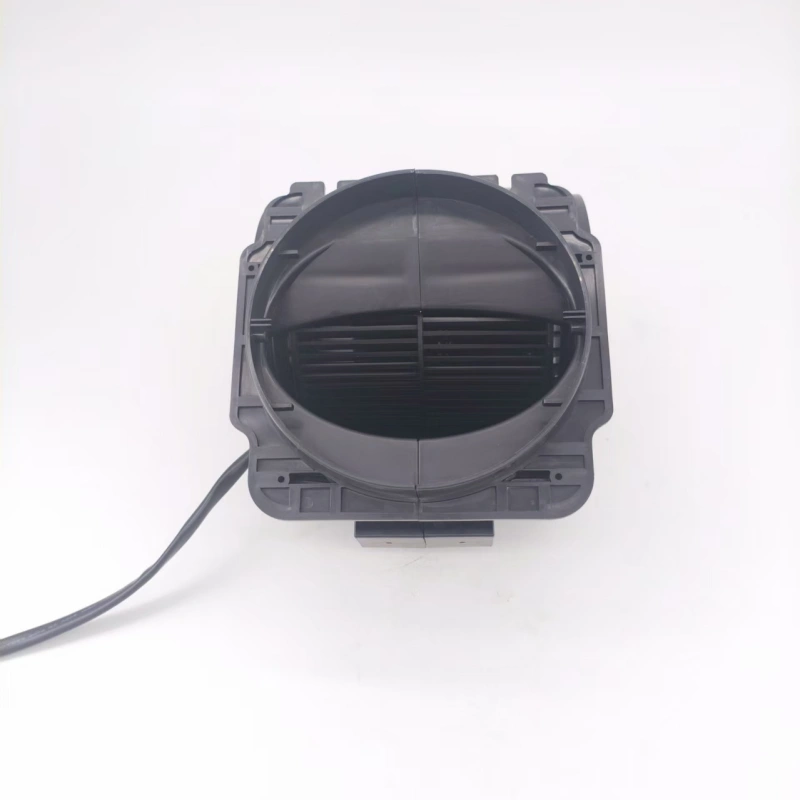
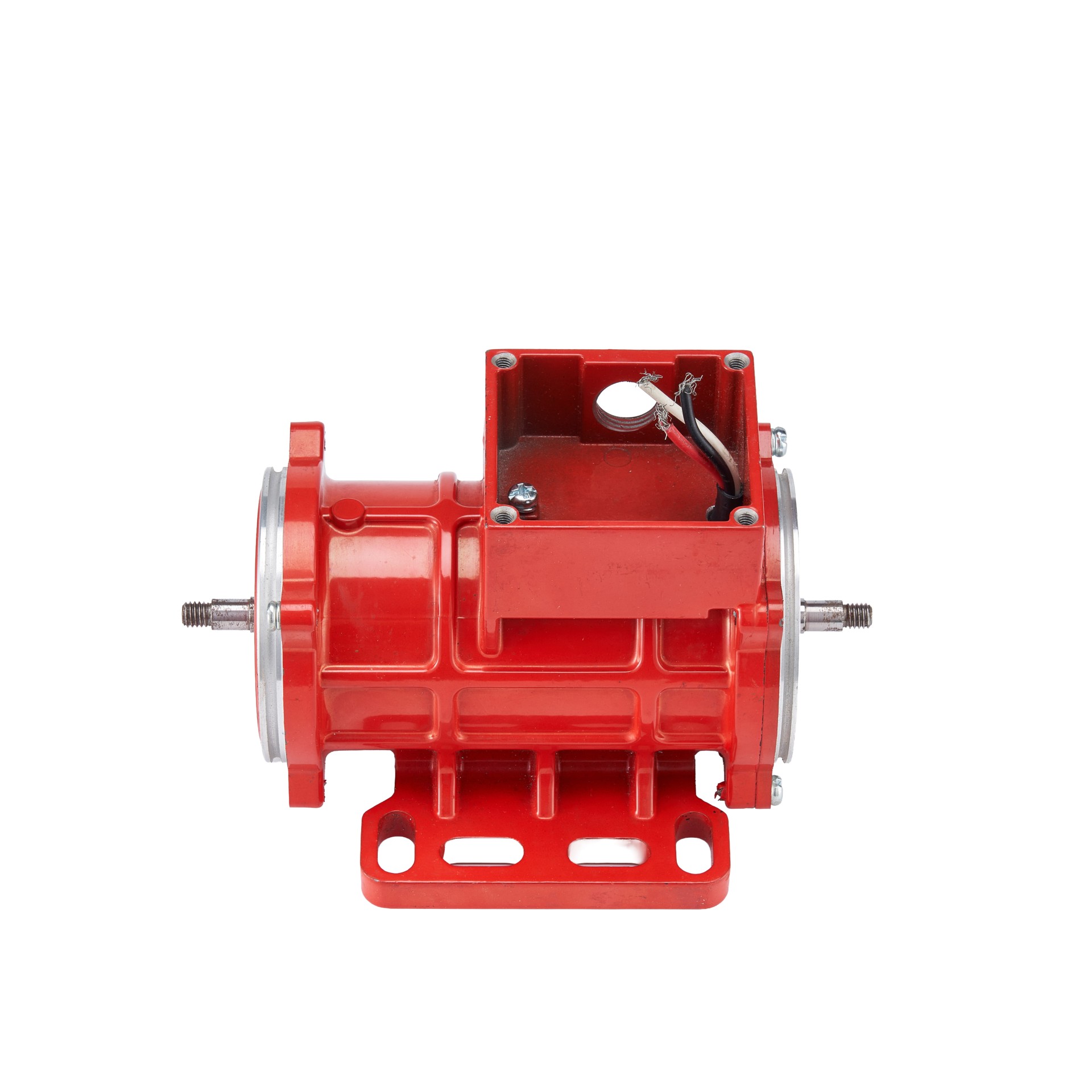
The core requirements of industrial fans are to continuously and stably output medium and low-speed torque, while taking into account operational economy and maintenance convenience. The structure and characteristics of asynchronous AC motors are precisely highly matched with these requirements. The “standard configuration” logic can be analyzed from the following four aspects.
Firstly, the high reliability brought by simple structure meets the long-term operation needs of fans. Asynchronous AC motors do not require high-precision excitation devices and slip rings like synchronous motors, nor do they need commutators and brushes that are necessary for DC motors. Their core structure only consists of basic components such as stators, rotors, and machine bases. This simplified structure greatly reduces the number of fault points. Industrial fans usually need to operate continuously for 24 hours, and the rotor of asynchronous motors has no winding design, which avoids the risk of winding burnout. The stator windings are also less prone to insulation aging due to uniform stress. Data shows that the average trouble-free operation time of asynchronous AC motors in industrial fans can reach more than 8,000 hours, which is 1.5 times that of synchronous motors, effectively reducing the impact of fan shutdown on industrial production.
Secondly, the speed characteristics perfectly match the fan load curve, resulting in better operating efficiency. The load of industrial fans is a typical “square torque load”, meaning the load torque is proportional to the square of the speed. The load torque is small during startup and needs to be maintained stably during operation. When the asynchronous AC motor starts, the rotor speed is lower than the speed of the rotating magnetic field, resulting in a certain slip rate. Although the starting current is 4-7 times the rated current, the starting torque is sufficient to drive the fan blades to accelerate from zero. During normal operation, the slip rate is controlled between 1% and 5%, and the speed is stably maintained at 1500r/min or 3000r/min (corresponding to 50Hz power frequency power supply), which highly matches the rated working condition of the fan. In contrast, synchronous motors need to strictly maintain the synchronization between speed and power supply frequency. If the fan load fluctuates, it is easy to cause out-of-step faults. DC motors need to adjust the speed through speed control devices, which instead increases energy consumption in constant-speed operation scenarios.
Thirdly, the advantages of cost control and power grid adaptation are significant, reducing the application threshold. In terms of purchase cost, the manufacturing cost of asynchronous AC motors is more than 30% lower than that of synchronous motors with the same power. Due to the absence of an excitation system, material consumption is reduced by about 20%. In terms of operating cost, three-phase power frequency AC is widely used in the industrial field. Asynchronous motors can be directly connected to the power grid for operation without additional configuration of frequency conversion starting devices (the fan starting load is low, and the impact of direct starting on the power grid is controllable). However, synchronous motors need to be equipped with excitation power supplies, and DC motors need rectification equipment, both of which increase system investment. In addition, the power factor of asynchronous motors can be easily adjusted through capacitor compensation, avoiding the impact on the power quality of the power grid and further enhancing their economy.
Finally, the maintenance convenience meets the practical needs of industrial scenarios. Industrial fans are mostly installed in hard-to-reach locations such as workshop corners and rooftops, making maintenance difficult. Asynchronous AC motors have no easily worn components such as slip rings and brushes. Daily maintenance only requires regular cleaning of dust on the stator windings and inspection of bearing lubrication, with a maintenance cycle of up to 6 months. In contrast, the excitation system of synchronous motors needs regular calibration, and the commutator of DC motors is prone to spark wear, requiring monthly shutdown inspections, which increases maintenance workload and production costs. At the same time, the fault diagnosis of asynchronous motors is simple. The operating status can be judged through ammeters and vibration sensors, and ordinary electricians can complete maintenance operations after simple training, reducing the dependence on professional and technical personnel.
In summary, asynchronous AC motors, with their comprehensive advantages of high reliability, load adaptability, economy, and convenient maintenance, accurately match the operating needs of industrial fans and have become the preferred power source for fan equipment in the industrial field.