English
  French
  German
  Spanish
  Portuguese
  Dutch
Dutch  Italian
  Russian
  Chinese
  Japanese
  Korean
  Indonesian
  Thai
Thai  Vietnamese
  Arabic
  Turkish
  Hebrew
  Hindi
Hindi 
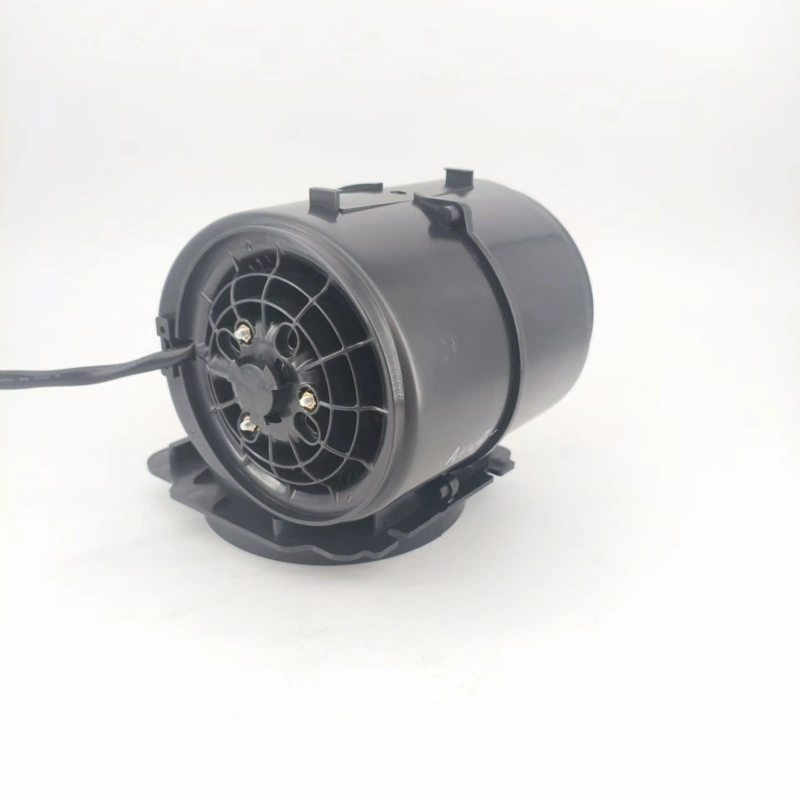
AC motors are widely used in various fields such as industrial production, transportation, and smart homes due to their advantages of simple structure, high reliability, and low cost. Variable frequency speed regulation technology has become the mainstream method for AC motor speed regulation because it can achieve precise control of motor speed and significantly improve energy utilization efficiency. However, in practical applications, AC motors are prone to overheating and overload during variable frequency speed regulation, which not only reduces motor operating efficiency but also may shorten the service life of the motor and even cause equipment failures. Clarifying the causes of this phenomenon and taking targeted suppression measures are of great significance for ensuring the stable and reliable operation of AC motors.
1. Core Causes of Overheating and Overload in AC Motors During Variable Frequency Speed Regulation
The occurrence of overheating and overload in AC motors during variable frequency speed regulation is the result of the combined effect of multiple factors, and the core causes can be summarized into the following three points: First, increased harmonic losses. The output of the inverter is not an ideal sine wave but a Pulse Width Modulation (PWM) waveform, which contains a large number of high-order harmonics. These harmonics will generate additional harmonic losses in the motor’s stator windings, rotor bars, and iron core, and the harmonic losses are converted into heat, leading to an increase in motor temperature. Especially in the low-frequency speed regulation condition, the harmonic content of the inverter’s output voltage is higher, and the harmonic losses are more prominent, which can easily cause overheating and overload. Second, magnetic saturation and increased iron loss. During variable frequency speed regulation, to ensure constant motor magnetic flux, the control strategy of “constant voltage-frequency ratio” is usually adopted. However, in the low-frequency range, the voltage drop of the motor’s stator resistance is relatively significant; if no voltage compensation is performed, the actual magnetic flux will be insufficient. On the other hand, excessive compensation will cause magnetic saturation, which will greatly increase the hysteresis loss and eddy current loss (collectively referred to as iron loss) of the iron core. The increase in iron loss directly intensifies motor heating. Third, decreased efficiency of the cooling system. The cooling system of AC motors (such as fans) is mostly rigidly connected to the motor shaft, and its cooling air volume is proportional to the motor speed. Under the low-frequency condition of variable frequency speed regulation, the motor speed decreases, the fan speed decreases accordingly, the cooling air volume is greatly reduced, the heat generated by the motor cannot be dissipated in time, and the heat accumulation causes the motor temperature to rise, thereby triggering overload protection.
2. Technical Means to Suppress Overheating and Overload
In view of the above reasons, the following technical means can be used to effectively suppress the overheating and overload phenomenon of AC motors during variable frequency speed regulation: First, optimize the inverter control strategy to reduce harmonic losses. On the one hand, adopt high-performance PWM modulation technology, such as Space Vector Pulse Width Modulation (SVPWM). Compared with the traditional Sinusoidal Pulse Width Modulation (SPWM), SVPWM can effectively reduce the harmonic content of the inverter’s output voltage and lower harmonic losses. On the other hand, implement voltage compensation in the low-frequency range. By accurately calculating the stator resistance voltage drop, appropriately increase the inverter’s output voltage to ensure constant magnetic flux and avoid increased iron loss caused by magnetic saturation. In addition, some high-end inverters are equipped with harmonic suppression functions, which can further weaken the impact of harmonics through built-in filters. Second, improve the motor cooling system to enhance heat dissipation efficiency. For motors that operate at low frequencies for a long time, an independently driven cooling fan can be used. The fan is powered by a dedicated power supply, not affected by the motor speed, ensuring stable cooling air volume at any speed. At the same time, the motor’s heat dissipation structure can be optimized, such as increasing the number of heat sinks, using high-efficiency heat dissipation materials, or installing forced cooling devices (such as cooling water pipes and heat dissipation fans) on the motor housing to improve heat transfer efficiency. Third, select special variable frequency motors to adapt to speed regulation requirements from the source. Special variable frequency motors are fully designed considering the characteristics of variable frequency speed regulation, adopting lower stator resistance, better iron core materials, and winding structures, which can effectively reduce harmonic losses and iron loss. At the same time, their cooling systems are mostly independently designed to ensure heat dissipation effects at different speeds. Compared with ordinary AC motors, the heating problem of special variable frequency motors under variable frequency speed regulation conditions is significantly improved, and the overload capacity is stronger. Fourth, real-time monitoring and intelligent protection to prevent overload risks. Install temperature sensors and current sensors in the motor control system to real-time monitor key parameters such as motor winding temperature and stator current. When the monitored temperature exceeds the threshold or current overload occurs, the inverter automatically takes protective measures such as frequency reduction and load reduction to avoid motor damage caused by continuous heating. At the same time, the dynamic balanced distribution of loads can be achieved through the algorithm optimization of the control system, reducing the probability of the motor operating under heavy load conditions for a long time.
In summary, the overheating and overload phenomenon of AC motors during variable frequency speed regulation is mainly caused by increased harmonic losses, magnetic saturation with increased iron loss, and decreased cooling efficiency. By optimizing the inverter control strategy, improving the cooling system, selecting special variable frequency motors, and implementing real-time monitoring and protection and other technical means, this problem can be effectively suppressed, ensuring the stable, efficient, and reliable operation of AC motors under variable frequency speed regulation conditions, extending the service life of the equipment, and improving the economy and safety of the entire transmission system.