English
  French
  German
  Spanish
  Portuguese
  Dutch
Dutch  Italian
  Russian
  Chinese
  Japanese
  Korean
  Indonesian
  Thai
Thai  Vietnamese
  Arabic
  Turkish
  Hebrew
  Hindi
Hindi 

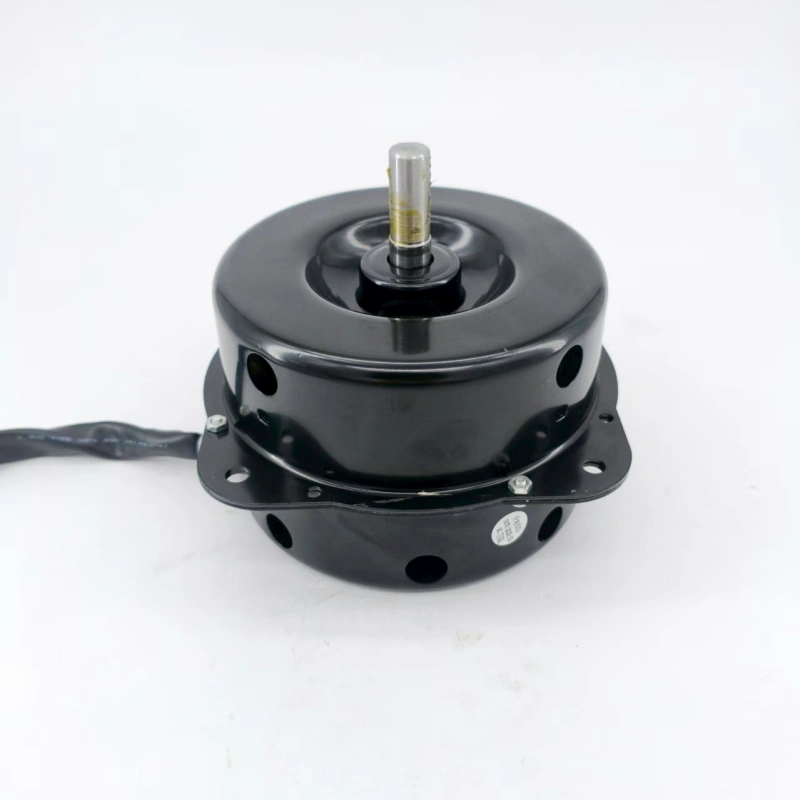
As the core component of the air shower system in clean workshops, the air shower exhaust fan is responsible for discharging dust entrained during the air shower process and maintaining indoor air pressure balance. The problem of insufficient air volume accompanied by abnormal noise will not only reduce the air shower purification effect but also accelerate the wear of exhaust fan components, affecting the environmental compliance of the entire clean area. Combined with the structural characteristics and actual operating scenarios of the air shower exhaust fan, troubleshooting and resolution can be carried out step by step from the following aspects.
I. Core Causes and Troubleshooting Methods for Insufficient Air Volume
Insufficient air volume is essentially a decrease in the exhaust efficiency of the fan, mostly caused by blocked air flow channels, wear of power components, or system seal failure. First, check the air filtration system: the air inlet of the air shower exhaust fan is usually equipped with primary and intermediate filters. During long-term operation, dust and impurities will adhere to the filter material surface, increasing ventilation resistance. Turn off the power, disassemble the filter, and observe its cleanliness. If there is obvious dust accumulation or blockage, replace it with a filter of the same specification in a timely manner, or clean the washable filter material with high-pressure air blowing or water flushing (install after drying). Note that the filter specification must match the exhaust fan; arbitrarily replacing the filter with excessively large pore size will allow dust to directly enter the fan interior, aggravating component wear, while excessively small pore size will further suppress air volume.
Second, check whether the air duct is unobstructed. The air duct of the air shower exhaust fan connects the air shower chamber to the outdoors. Accumulation of a large amount of oil stain, dust, or foreign object blockage in the air duct (such as residual debris during installation, pipeline deformation and extrusion) will hinder air flow. Inspect through the air duct access port, clean the dusty parts with special tools, and correct or replace the deformed pipeline in time to ensure the inner wall of the air duct is smooth and unobstructed. At the same time, check whether the air outlet louver is fully open. In some cases, the louver may fail to open completely due to rust or jamming, limiting exhaust efficiency; apply lubricant or replace damaged components as needed.
Finally, check the power performance of the fan motor. The motor is the power core of the exhaust fan. Wear of motor bearings or aging of windings will reduce the rotation speed, resulting in insufficient air volume. Use a multimeter to detect the motor winding resistance; if the resistance deviates from the standard range, it indicates a fault in the windings, and professional personnel should be contacted for maintenance or motor replacement. If the bearings are worn, it will be accompanied by rotational jamming; disassemble the motor, replace the bearings with the same model, and apply grease to improve rotation smoothness.
II. Sources of Abnormal Operation Noise and Treatment Plans
Abnormal noise during the operation of the air shower exhaust fan is mostly caused by mechanical friction, loose components, or air flow disturbance, and accurate positioning should be based on the noise type. If it is a low-frequency “buzzing” noise accompanied by motor heating, it is mostly due to damage or capacity attenuation of the motor start capacitor. The start capacitor provides instantaneous power for motor startup; damage to it will cause the motor to fail to start normally or run at insufficient speed, resulting in abnormal noise. Replace the start capacitor matching the motor power, and pay attention to correct wiring of the capacitor’s positive and negative poles to avoid short circuits.
If it is a sharp noise such as “friction sound” or “impact sound”, it is mostly a fault of the fan impeller. During long-term operation, the impeller may have center of gravity deviation due to uneven dust accumulation, or the impeller blades may be deformed or broken, causing friction with the fan housing during rotation and generating noise. Disassemble the fan housing, clean the dust on the impeller surface, and correct the deformed blades; replace the impeller if the blades are broken. At the same time, check whether the impeller fixing bolts are loose. Loose bolts will cause the impeller to shift during rotation, aggravating friction; tighten the bolts and install lock washers.
In addition, loose air duct connections may also cause abnormal noise. If the sealing strip at the interface between the air duct and the exhaust fan is aging or falling off, or the connecting bolts are loose, air will leak from the gaps during operation, generating a “hissing” sound or air flow disturbance noise. Replace the aging sealing strip, tighten the connecting bolts to ensure tight sealing of the interface, and check whether the air duct fixing bracket is firm to avoid increased noise caused by air duct vibration.
III. Daily Prevention and Maintenance Suggestions
To avoid problems such as insufficient air volume and abnormal noise of the air shower exhaust fan, a regular maintenance mechanism should be established. Check the filter dust accumulation weekly, clean impurities on the air duct and impeller surface monthly, lubricate and inspect the motor quarterly, and replace aging components in a timely manner. Meanwhile, avoid leaving the air shower door open for a long time during use to prevent a large amount of dust from entering the system and increasing the operating load of the exhaust fan.
If the problem is still not resolved after the above troubleshooting, it may be due to severe damage to the internal structure of the exhaust fan (such as housing deformation, motor burnout). It is recommended to contact a professional maintenance team for inspection and repair, or replace the exhaust fan with a suitable one to ensure the air shower is always in good operating condition and guarantee the environmental quality of the clean area.