 English
  French
  German
  Spanish
  Portuguese
  Dutch
Dutch  Italian
  Russian
  Chinese
  Japanese
  Korean
  Indonesian
  Thai
Thai  Vietnamese
  Arabic
  Turkish
  Hebrew
  Hindi
Hindi 

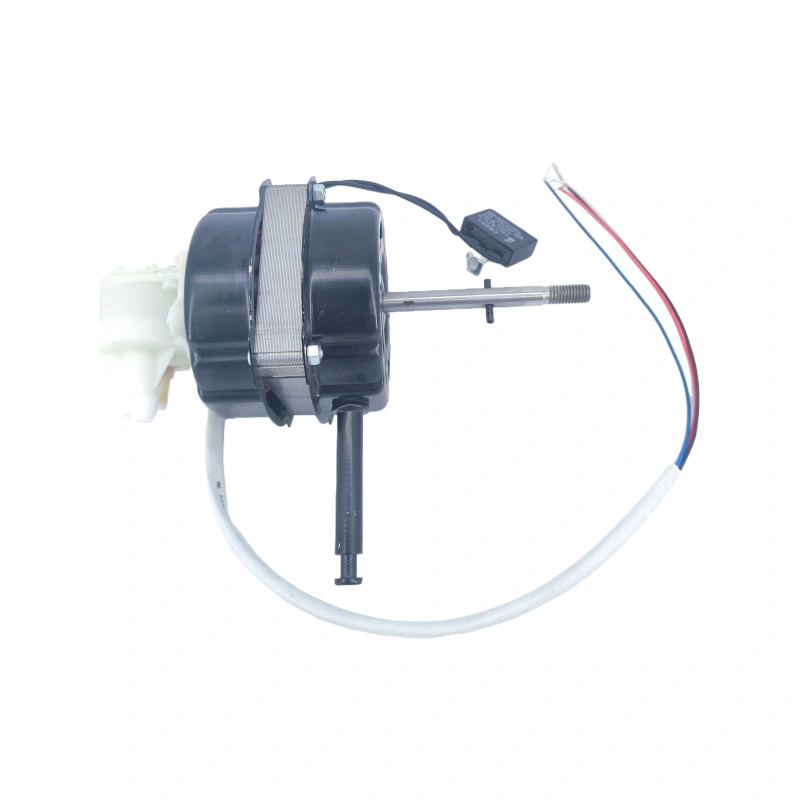
As the core power component of a fan, a fan motor generates a certain amount of heat during normal operation, but the temperature is usually controlled within a touchable and non-scalding range (generally, the housing temperature ≤ 60℃). Obvious abnormal heating not only shortens the service life of the fan but also may cause potential safety hazards such as motor burnout and short circuit. This phenomenon is mostly related to motor faults, improper installation and use, and external environmental influences. The specific causes and solutions are as follows:
I. Analysis of Core Causes
(I) Internal Motor Faults
1. Aging or damage of winding insulation: The winding is the core component of the motor that generates a magnetic field. After long-term use, the insulation layer may age or be damaged due to high temperature, moisture, wear, etc., leading to winding short circuit or leakage. A short circuit will cause an abnormal increase in current, generating a large amount of heat instantly, which is manifested by rapid motor heating, reduced speed, and even an unusual odor.
2. Bearing wear or insufficient lubrication: The motor rotor and stator are connected by bearings. Long-term operation of bearings may cause wear, rust, or drying and deterioration of lubricating grease, resulting in increased rotational resistance. The increased resistance will raise the motor load and current, further intensifying heating, accompanied by increased operating noise and unstable speed.
3. Rotor jamming or eccentricity: Foreign objects wrapped around the fan blades or loose internal motor parts may cause the rotor to jam and fail to rotate normally. At this time, the motor is in a “locked-rotor” state, and the current will rise sharply, leading to severe heating in a short time. Rotor eccentricity will cause friction with the stator during operation, resulting in mechanical loss and heating, along with violent vibration.
(II) Improper Installation and Use
1. Overload: Mismatch between the fan blade specification and motor power (e.g., excessively large or thick blades) or improper adjustment of blade angle during installation will make the motor operate under overload for a long time. To maintain power output, the current remains high, and heat accumulates continuously.
2. Insufficient installation accuracy: Unstable motor fixing, loose base, or eccentric blade installation will cause vibration during operation, increasing mechanical loss and affecting motor heat dissipation. Blocked air inlets and outlets and poor ventilation will prevent the heat generated by the motor from being dissipated in time, forming a “heat accumulation” phenomenon.
3. Abnormal power supply voltage: Excessively high, low, or fluctuating power supply voltage will affect the normal operation of the motor. High voltage will increase the winding current and intensify heating; low voltage will cause difficulty in motor startup, insufficient speed, relatively increased load, and thus heating.
(III) External Environmental Influences
1. High ambient temperature: Long-term operation of the fan in a high-temperature environment (such as a closed space in summer or near heat sources) will hinder motor heat dissipation due to external heat, resulting in the inability of internal heat to be discharged and gradual accumulation and heating.
2. Excessive environmental dust: Dust entering the motor will adhere to windings, bearings, and other components, which not only affects insulation performance but also clogs heat dissipation channels, reducing heat dissipation efficiency. At the same time, it accelerates bearing wear and indirectly causes heating.
II. Targeted Solutions
(I) Troubleshoot Internal Motor Faults and Perform Precise Maintenance
1. Handling of winding faults: Turn off the power and wait for the motor to cool down, then use a multimeter to detect the winding resistance. If the resistance is abnormally small (close to zero), it indicates a short circuit. For mild short circuits, rewind the windings and perform good insulation treatment; for severe cases, replace the motor windings of the same model or the entire motor. Daily attention should be paid to avoiding motor moisture and overload to extend the service life of the insulation layer.
2. Handling of bearing faults: If the motor makes abnormal noise and heats up, disassemble the motor to check the bearing wear. For mild wear, clean the bearing surface and apply special lubricating grease (such as lithium-based grease); for severely worn or rusted bearings, replace them with bearings of the same specification. After replacement, ensure the rotor rotates flexibly without jamming.
3. Handling of rotor faults: Clean foreign objects (such as hair, dust, and entanglements) on the fan blades, check for loose internal motor parts, adjust the rotor position to ensure no eccentricity or jamming. If the rotor is deformed due to collision, correct the rotor or replace the motor.
(II) Standardize Installation and Use to Reduce Load and Loss
1. Match load and power: Ensure the fan blade specification is compatible with the motor power; do not arbitrarily replace with large-size or thick blades. Adjust the blade angle reasonably to avoid motor overload.
2. Optimize installation accuracy: Firmly fix the motor base to avoid vibration during operation; adjust the blade installation position to ensure the eccentricity is within the allowable range. Keep the air inlets and outlets unobstructed to provide good conditions for motor heat dissipation.
3. Stabilize power supply: Use a power supply that meets the rated voltage of the motor to avoid voltage fluctuations. If the voltage in the area is unstable, install a voltage stabilizer to protect the motor from abnormal voltage.
(III) Improve the External Environment to Enhance Heat Dissipation
1. Control ambient temperature: Avoid long-term operation of the fan in high-temperature and closed spaces; use ventilation equipment to reduce the ambient temperature if necessary. Keep away from heat sources (such as heating and stoves) to reduce external heat conduction.
2. Regular cleaning and maintenance: Regularly clean dust on the motor surface and inside, especially windings, bearings, and heat sinks, to keep the heat dissipation channels unobstructed. When used in a dusty environment, install a dust cover to reduce dust intrusion.
III. Notes
If the motor heating is accompanied by severe phenomena such as burning smell, smoke, or violent vibration, immediately turn off the power and stop using it to avoid potential safety hazards such as fire and short circuit. In this case, it is recommended to contact professional maintenance personnel for inspection and repair; do not disassemble it yourself to avoid secondary damage. In daily use, regularly clean and lubricate the fan motor, and avoid long-term continuous operation, which can effectively reduce abnormal heating and extend the motor service life.
 during operation, and how to solve it targetedly?)