 English
  French
  German
  Spanish
  Portuguese
  Dutch
Dutch  Italian
  Russian
  Chinese
  Japanese
  Korean
  Indonesian
  Thai
Thai  Vietnamese
  Arabic
  Turkish
  Hebrew
  Hindi
Hindi 
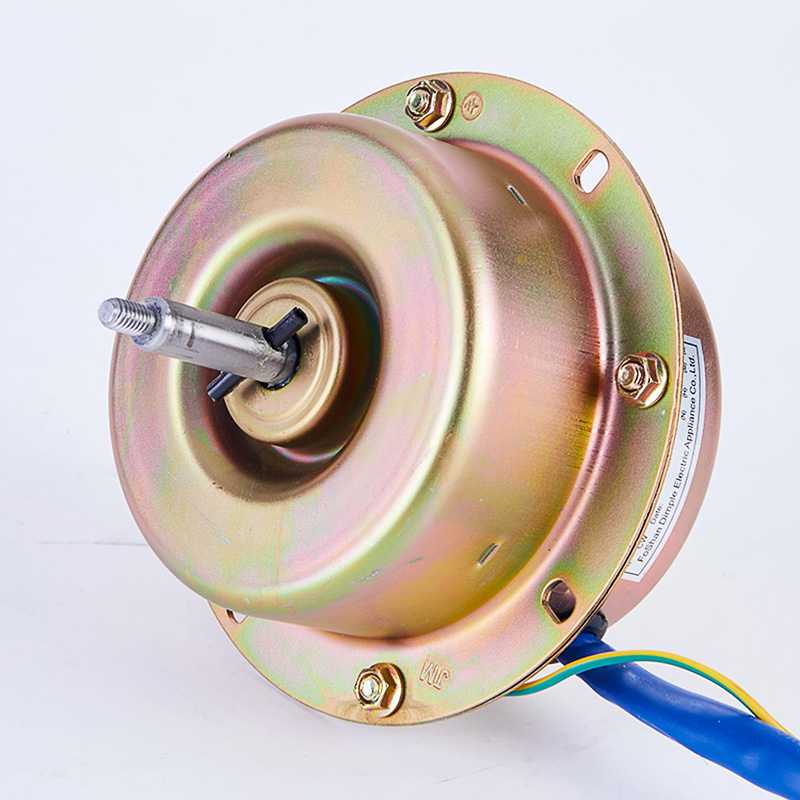
Overheating of AC motors is a common fault phenomenon, which can lead to insulation aging, decreased efficiency, and even burnout. The reasons are multifaceted and can usually be divided into several categories: electrical reasons, mechanical reasons, environmental and ventilation reasons, as well as selection and application reasons.
1、 Electrical reasons
This is the most common cause of motor overheating.
Voltage abnormality:
High voltage: causing saturation of magnetic flux in the iron core, sharp increase in iron loss, and overheating of the iron core.
At the same time, the excitation current increases, causing the winding to overheat.
Low voltage: When the load power remains constant, a decrease in voltage will cause a proportional increase in current (I=P/U * cos φ), resulting in increased copper loss and overheating of the winding.
Voltage imbalance (three-phase motor): Even a small three-phase voltage imbalance can lead to an increase in negative sequence current, generating additional rotating magnetic fields and losses, causing the motor to generate additional heat, and the impact is far beyond imagination.
Excessive current:
Overload operation: This is the most common reason.
The mechanical power of the load exceeds the rated power of the motor, resulting in current exceeding the rated value, increased copper loss, and overheating.
Winding issue:
Interturn short circuit: The insulation inside the winding is damaged, causing partial coil short circuit and generating circulating current, resulting in severe local heating.
Phase to phase short circuit or ground short circuit: a serious insulation fault that causes a sharp increase in current and quickly burns out.
Wrong winding connection: such as connecting a star to a triangle, or connecting a triangle to a star, resulting in abnormal current and magnetic flux.
Low power factor: High reactive current increases the total current, leading to increased losses in the circuit and windings.
2、 Mechanical reasons
Bearing issues:
Lack of oil in bearings, aging or excessive lubricating grease, and bearing damage (wear, pitting) can all lead to an increase in frictional resistance, causing the bearings to generate heat and transmit it to the casing, while also increasing the mechanical load on the motor.
Friction between rotor and stator:
Commonly known as “sweeping the chamber”.
Due to bearing wear, shaft bending, or improper assembly, the rotor and stator iron core rub against each other, generating a large amount of heat and noise.
Load mechanical failure:
The dragged equipment (such as pumps, fans, compressors) has problems such as jamming, misalignment, and damaged gearboxes, resulting in abnormal increase in motor load.
Installation issues:
Uneven motor installation foundation, tight belt, and misaligned coupling cause additional mechanical stress.
3、 Environmental and ventilation reasons
Motor heat dissipation relies on good cooling.
Poor ventilation:
Fan damage, blocked air inlet or outlet, air duct covered with dust and debris (especially for enclosed motors with higher protection levels).
For self cooling motors, long-term low-speed operation can lead to insufficient fan airflow.
High ambient temperature:
The motor is installed in a high-temperature environment (such as a boiler room or direct sunlight), which makes it difficult to dissipate heat and naturally leads to excessive temperature rise.
Damp or polluted environment:
Moisture or conductive dust adheres to the surface of the winding, reducing insulation performance and potentially causing partial discharge or increased leakage current, leading to heat generation.
4、 Reasons for selection and application
Improper motor selection:
The selection of power, torque, or speed is too small, and the motor operates under overload or near overload conditions for a long time.
The load type does not match the characteristics of the motor (such as using a regular motor for frequent or heavy load starting).
Work schedule mismatch:
Use continuous duty motors for frequent starting, braking, or periodic loads.
The starting current is usually 5-7 times the rated current, and frequent starting and stopping can generate significant heat accumulation.
Improper control method:
When using a frequency converter to drive, if the carrier frequency is set too high, there is insufficient heat dissipation during low-frequency operation, or if appropriate parameter compensation is not performed (such as improper low-frequency voltage compensation).
Suggested troubleshooting steps
When the motor is found to be overheated, the following sequence can be followed for troubleshooting:
Power off touch judgment: Turn off the power first, touch it with your hand (pay attention to safety), and feel whether the overall heating is uniform or localized (such as the bearing end) heating.
Check load: Measure whether the operating current exceeds the rated current and determine whether it is overloaded.
Check the power supply: Use a multimeter or power quality analyzer to measure whether the three-phase voltage is balanced and around the rated value.
Check the mechanical part: manually rotate the rotor for flexibility and no abnormal noise;
Check bearings, belts, and couplings.
Check ventilation and environment: clean the dust in the air duct and casing;
Ensure that the ambient temperature is normal.
Electrical testing: Use a megohmmeter to measure insulation resistance, and use a bridge to measure whether the DC resistance of the three-phase winding is balanced, in order to determine if there are any problems with the internal winding.
Comprehensive analysis: Based on the motor model, load characteristics, and operating records, determine whether there are issues with improper selection or application.
In short, motor overheating is a systemic problem that requires comprehensive analysis from multiple aspects such as power supply, motor itself, load machinery, and usage environment
