English
  French
  German
  Spanish
  Portuguese
  Dutch
Dutch  Italian
  Russian
  Chinese
  Japanese
  Korean
  Indonesian
  Thai
Thai  Vietnamese
  Arabic
  Turkish
  Hebrew
  Hindi
Hindi 

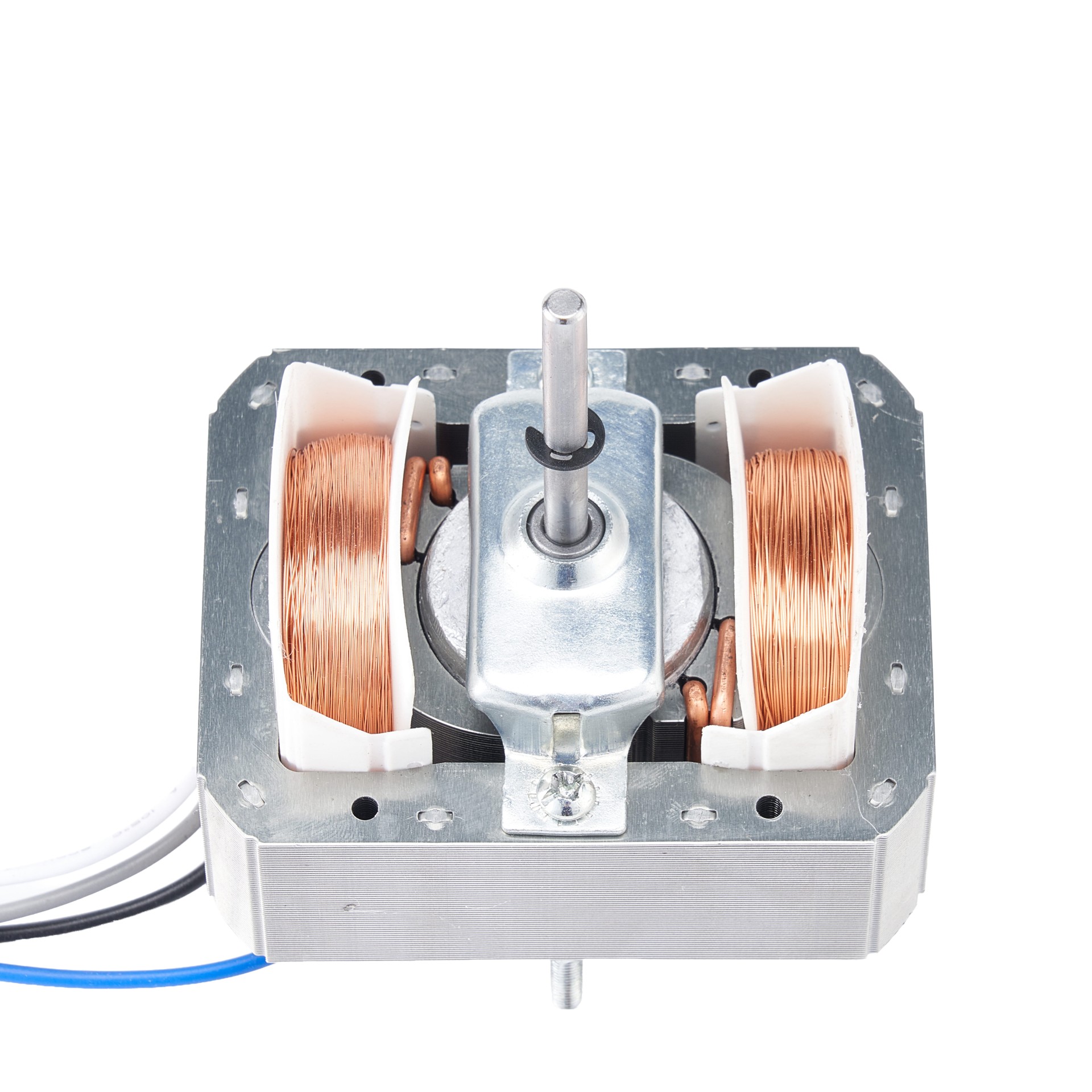
The replacement of DC motors with AC motors involves three major technical routes: complete machine replacement, electronic control adaptation, motor body modification, and power inverter drive. In industrial scenarios, the mainstream solution is to drive AC asynchronous/servo motors with frequency converters.
1、 Complete machine replacement+electronic control adaptation (most commonly used and reliable)
Directly dismantling the DC motor and replacing it with an AC motor with a dedicated controller is the first choice for industrial upgrading.
1. AC asynchronous motor+frequency converter (VFD) scheme
Applicable to general loads such as fans, pumps, conveyors, and machine tool spindles, with medium to high power ranging from 0.75kW to several hundred kW.
Core configuration:
Motor: Three phase asynchronous motor (Y series, IE2/IE3 high-efficiency type).
Drive: Universal frequency converter (realizing AC → DC → AC frequency conversion, with a speed range of 0.5-100Hz).
Braking: Frequent start stop/emergency stop requires the addition of a braking unit and braking resistor.
Control: Retain the potentiometer and PLC signals of the original DC speed regulation, and connect them to the AI/DI port of the frequency converter.
Advantages: mature and reliable, simple maintenance, moderate cost, smooth speed regulation.
Selection criteria: The power of the frequency converter should be greater than or equal to the power of the motor;
Choose vector control type for heavy load/frequent acceleration and deceleration.
2. Communicate servo motor+servo driver solutions
Applicable: High precision positioning, fast response scenarios (robots, machine tool feed, packaging machinery).
Core configuration:
Motor: Permanent magnet synchronous servo motor (PMSM) with encoder (17/23 bits).
Drive: Servo drive (three loop control of current loop, speed loop, and position loop).
Interface: Compatible with pulse/analog/bus (Profinet, EtherCAT) of the original DC servo.
Advantages: Positioning accuracy of ± 1 pulse, fast response, high efficiency, and large low-speed torque.
Disadvantage: Higher cost than asynchronous solutions, requiring professional debugging.
3. Single phase AC motor+variable frequency/capacitor start (low power)
Applicable: Household/small devices (≤ 1.5kW), such as fans and small pumps.
Solution:
Single phase asynchronous motor+single-phase frequency converter (speed regulation).
Or single-phase capacitor start/run motor (fixed speed, only replacing motor+changing wiring).
2、 Motor body renovation (retaining the base and modifying the internal structure)
Do not replace the entire machine, only modify the stator/rotor, adapt to AC power supply, suitable for special machine bases or small batch scenarios.
1. stator winding rewinding+rotor replacement (DC to AC asynchronous)
Steps:
Dismantle the armature winding and excitation winding of the DC motor.
Stator slot rewinding three-phase AC winding (Y/△ connection method).
Replace the rotor with a cage type cast aluminum rotor (asynchronous motor rotor).
Install end caps, bearings, and a frequency converter drive.
Applicable: Replacement of the same machine base, reuse of old equipment.
Limitations: The transformation process is complex, the efficiency is lower than that of new motors, and the reliability is average.
2. Change permanent magnet DC motor to permanent magnet synchronous AC (PMSM)
Core: Utilizing the original permanent magnet rotor, rewinding the stator into a three-phase AC winding, equipped with servo/permanent magnet drives.
Advantages: Retain high torque density and improve efficiency.
Difficulties: winding design, driver matching, encoder installation.
3、 Power inverter drive (DC power supply → AC motor, without changing the motor body)
DC bus power supply scenarios (such as batteries, photovoltaics, DC drive systems), using inverters to drive AC motors.
1. DC bus+frequency converter (common DC bus scheme)
Architecture: DC power supply (battery/rectifier) → DC terminal of frequency converter → AC motor.
Applicable: Multi motor shared DC bus, electric vehicles, energy storage systems, DC power supply workshops.
Advantages: Energy feedback (electric energy returning to the bus during braking), high efficiency, and simplified wiring.
2. DC-AC inverter+ordinary AC motor
Solution: Independent DC-AC inverters (such as photovoltaic inverters and vehicle mounted inverters) drive single-phase/three-phase AC motors.
Applicable: Mobile devices, outdoor non AC scenarios (≤ 10kW).
Limitations: Low power, average efficiency, high harmonics.