 English
  French
  German
  Spanish
  Portuguese
  Dutch
Dutch  Italian
  Russian
  Chinese
  Japanese
  Korean
  Indonesian
  Thai
Thai  Vietnamese
  Arabic
  Turkish
  Hebrew
  Hindi
Hindi 
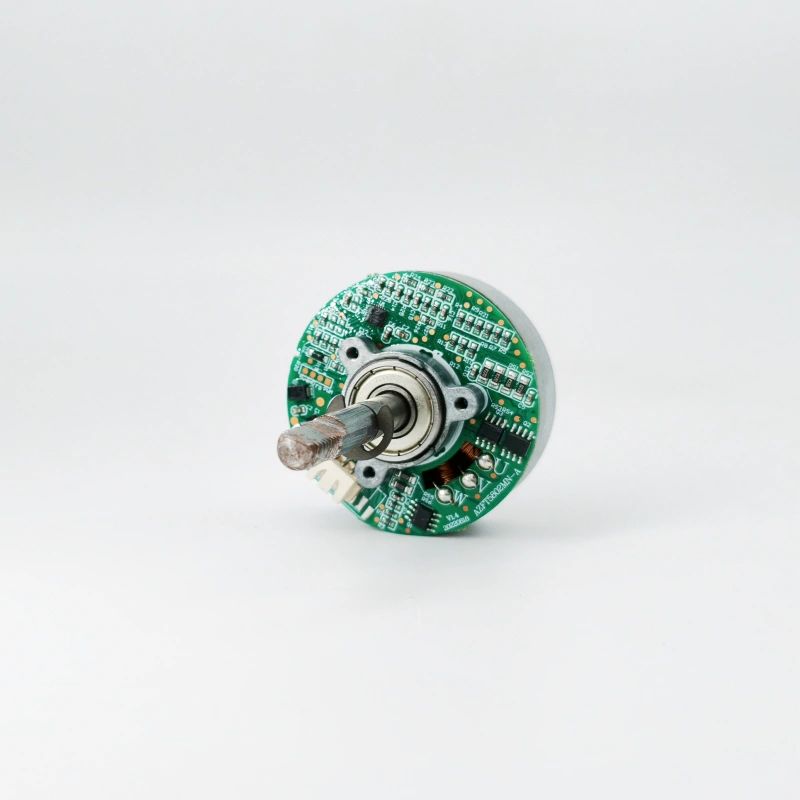
I. Introduction: Hazards and Classification Overview of Abnormal Noise in Fan Motors
As the core power component of a fan, the operating state of the fan motor directly determines the user experience and service life of the fan. Abnormal noise during operation is one of the most common fault manifestations of fan motors. It not only affects the comfort of use but also may lead to aggravated faults and even serious problems such as motor burnout if not handled in a timely manner. Combining the structural principle of the fan motor and actual usage scenarios, the causes of abnormal noise can be mainly divided into four categories: mechanical friction, lubrication failure, loose components, and winding faults. The corresponding solutions for different causes are different, and the specific analysis is as follows:
II. Mechanical Friction: Common Causes and Solutions of Abnormal Noise
This is one of the most common causes, mainly manifested as “scratching sound” or “rubbing sound” during operation, and in some cases, the rotation of the fan blades may be stuck. The core causes include: first, friction between the motor shaft and the inner wall of the bearing, which may be due to bearing wear and deformation, or bending and offset of the shaft after long-term use; second, friction between the fan blades and the motor housing or protective net, mostly caused by misalignment of blade installation, loose and deformed protective net, or displacement of the motor fixing bracket; third, friction between the rotor and stator inside the motor (commonly known as “rotor rubbing against stator”), which is a relatively serious situation, mostly caused by rotor eccentricity due to rotor shaft wear and bearing damage.
Targeted solutions: First, turn off the fan power and unplug the plug to ensure safe operation. If there is friction between the blades and the housing or protective net, first check if the protective net is loose, tighten the fixing screws with a screwdriver, and gently straighten it if the protective net is deformed; then check if the blades are installed in place, tighten the fixing nuts, and replace the blades if they are deformed themselves. If there is friction between the shaft and the bearing, you can first disassemble the motor housing to observe if the bearing has obvious wear or cracks. If the wear is slight, you can try to clean and re-lubricate it; if the wear is serious, you need to replace the bearing of the same model. If it is judged as the “rotor rubbing against stator” phenomenon, since it involves the adjustment of the internal structure of the motor, it is difficult for ordinary users to operate. It is recommended to directly replace the motor or contact professional maintenance personnel for treatment.
III. Lubrication Failure: Causes of Abnormal Noise and Lubrication Maintenance Plan
It is manifested as “buzzing friction sound” or “dry rotating sound” during operation, especially the abnormal noise is more obvious at the initial stage of fan startup, and may be slightly relieved after running for a period of time, but the speed will be significantly lower. A layer of oil film needs to be formed by lubricating oil between the rotating shaft and the bearing of the fan motor to reduce friction resistance. After long-term use, the lubricating oil will gradually volatilize and deteriorate, or mix with dust to form sludge, resulting in decreased lubrication effect and then abnormal noise.
Targeted solutions: After taking safety precautions, disassemble the motor housing and find the position of the bearing. First, wipe the rotating shaft and bearing with a clean cloth or cotton swab to remove dust, sludge and other impurities on the surface; then select a suitable lubricating oil, such as sewing machine oil, clock oil and other light lubricating oils. Avoid using greases with high viscosity such as butter (which will increase rotational resistance); drop 2-3 drops of lubricating oil on the contact area between the inner wall of the bearing and the rotating shaft, and rotate the rotating shaft to make it evenly distributed, then reassemble the motor housing. It is recommended to lubricate and maintain the motor every 6-12 months to extend its service life.
IV. Loose Components: Causes of Resonant Abnormal Noise and Fastening Measures
It is manifested as “rattling sound” or “resonant sound” during operation, especially the abnormal noise is more obvious when the fan rotates at high speed, which may be accompanied by slight shaking of the fan body. The main causes include: loose fixing screws of the motor, leading to resonance between the motor and the fan base during operation; loose fixing screws of the bearing end cover, leading to offset of the bearing position and shaking of the rotating shaft during rotation; loose fixing nuts of the fan blades, leading to offset vibration of the blades during rotation and then abnormal noise.
Targeted solutions: After turning off the power, fully check the fixed components of the fan. Use a screwdriver to check the fixing screws connecting the motor and the base, and the fixing screws of the bearing end cover one by one, and tighten the loose screws; check the blade fixing nuts to ensure they are tightened in place, and replace them with nuts of the same specification if the nuts are stripped. In addition, if the fan base itself is unstable, it may also cause resonant abnormal noise during operation. You can put an anti-slip pad at the bottom of the base to enhance stability.
V. Winding Faults: Judgment and Handling Suggestions for Circuit-Related Abnormal Noise
It is manifested as a “buzzing sound” when the fan is powered on, but the blades cannot rotate or rotate very slowly, and in some cases, it may be accompanied by a burnt smell. The core cause is the aging and damage of the insulation layer of the motor winding, leading to inter-turn short circuit or ground short circuit, which in turn causes abnormal winding current and magnetic field disturbance, resulting in abnormal noise; it may also be the aging and failure of the starting capacitor, leading to insufficient starting torque of the motor, failure to start normally, and then a “buzzing sound”.
Targeted solutions: This type of fault involves the motor circuit part, so operation must be cautious. If the fan only makes a “buzzing” sound but does not rotate after being powered on, you can first check the starting capacitor (usually located inside the motor housing, cylindrical), observe if the capacitor is bulging or leaking. If so, it indicates that the capacitor is invalid, and you need to replace the starting capacitor with the same specification (capacity, voltage) as the original. If the fan still cannot operate normally after replacing the capacitor, or if a burnt smell is smelled, it indicates that there is a short-circuit fault in the winding. It is difficult for ordinary users to repair the winding by themselves (professional tools are needed to detect the winding resistance and rewind the winding). It is recommended to directly replace the motor or contact professional maintenance personnel for treatment to avoid expanding the fault due to self-disassembly.
VI. Summary: Core Principles for Solving Abnormal Noise and Key Points of Daily Maintenance
The core principle for solving abnormal noise in fan motor operation is “first judge the type, then handle it targeted”. Prioritize checking simple and easy-to-solve problems such as mechanical friction and loose components, and then handle complex problems such as lubrication failure and winding faults. In daily use, regularly cleaning the motor, doing a good job in lubrication and maintenance, avoiding long-term continuous operation of the fan, and preventing foreign objects from entering the motor can effectively reduce the occurrence of abnormal noise faults. If the fault exceeds your own handling capacity, do not disassemble it forcibly. Timely replacement of components or seeking professional maintenance can minimize the use risk.
