English
  French
  German
  Spanish
  Portuguese
  Dutch
Dutch  Italian
  Russian
  Chinese
  Japanese
  Korean
  Indonesian
  Thai
Thai  Vietnamese
  Arabic
  Turkish
  Hebrew
  Hindi
Hindi 

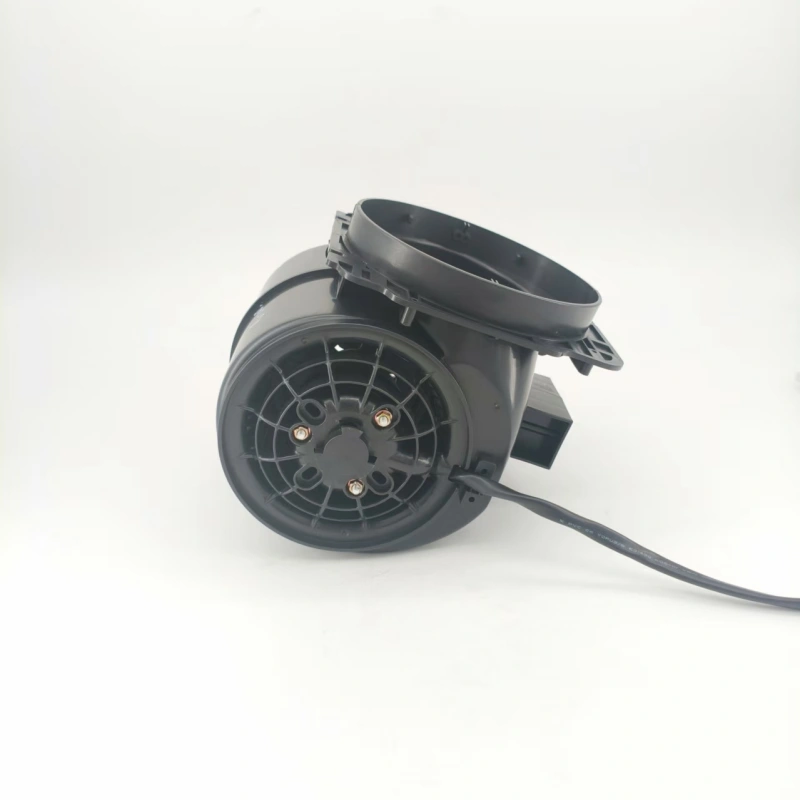
Industrial motors account for more than 60% of the country’s industrial electricity consumption, and their energy efficiency directly affects the operating costs of enterprises and the realization of the national “dual carbon” goals. At present, most enterprises still use low-efficiency motors, and some old motors even have energy efficiency lower than the national minimum standards, which not only causes energy waste but also increases equipment maintenance costs. The factors affecting motor energy efficiency are multi-dimensional, including not only the design and manufacturing issues of the motors themselves but also the selection, control, and operation and maintenance links in the use process. To achieve motor energy efficiency upgrading, enterprises need to formulate systematic solutions from the perspective of the whole life cycle.
The core factors affecting the energy efficiency of industrial motors mainly include four aspects. First, the efficiency level of the motor itself is low, which is the most fundamental reason. The efficiency of traditional JO2 series motors is only 75%-85%, while the efficiency of high-efficiency motors meeting the IE3 standard can reach more than 90%. The energy efficiency gap between the two is 5%-10%, and the energy consumption difference is extremely significant in long-term operation. Low-efficiency motors have high iron core loss, copper loss, and mechanical loss. For example, if the iron core uses ordinary silicon steel sheets instead of high-grade cold-rolled silicon steel sheets, the hysteresis loss and eddy current loss will increase significantly. Second, the selection is mismatched with the load, and the phenomenon of “big horse pulling a small cart” is common. Many enterprises deliberately choose motors with larger power to avoid motor overload, resulting in the motors operating in a low-load state (lower than 50% of the rated load) for a long time. At this time, the motor efficiency will drop sharply, and the energy consumption coefficient will rise significantly. For example, the rated power of a water pump motor in a chemical plant is 55kW, but the actual load is only 20kW, and the energy efficiency is more than 30% lower than the designed value. Third, the control method is backward, lacking effective speed regulation means. Fluid conveying equipment such as fans and water pumps account for more than 40% of the total industrial motors. Traditionally, the flow of such equipment is controlled by adjusting valves and baffles, and the motor always operates at the rated speed, resulting in a large amount of energy being wasted in throttling losses. Fourth, improper operation and maintenance lead to the attenuation of motor performance. For example, lack of oil and wear of bearings increase mechanical loss, dust accumulation on windings leads to poor heat dissipation and increased copper loss, and insulation aging causes local short circuits, all of which will make the actual energy efficiency of the motor lower than the designed value.
The primary path for enterprises to achieve motor energy efficiency upgrading is to promote the replacement of low-efficiency motors and select high-efficiency and energy-saving motors. The principle of “accurate matching” should be followed during replacement, rather than blindly pursuing high specifications. First, a comprehensive inspection of existing motors should be carried out to test their efficiency level, operating load rate, and energy consumption data. Priority should be given to replacing low-efficiency motors that have been in operation for more than 10 years and have a load rate of more than 60%. For equipment operating continuously, high-efficiency asynchronous motors or permanent magnet synchronous motors meeting IE3 or higher standards should be selected; for variable load equipment, permanent magnet synchronous motors should be preferred, which can maintain high efficiency in a wide load range and save 8%-15% more energy than IE3 motors of the same power. After a textile factory replaced 20 JO2 series motors with IE4 high-efficiency permanent magnet motors, each motor saved 12,000 kWh of electricity per year, and the investment payback period was only 14 months. During the replacement process, attention should be paid to the matching of the motor installation size with the original equipment to avoid excessive transformation costs affecting the feasibility of the project.
Second, optimize the motor control method and promote frequency conversion speed regulation technology. Frequency conversion speed regulation adjusts the speed by changing the motor power supply frequency, so that the motor output power accurately matches the load demand, which is especially suitable for variable load equipment such as fans, water pumps, and compressors. Data shows that after adopting frequency conversion speed regulation, the average energy saving rate of such equipment can reach 20%-40%, and the energy saving rate in some high-load fluctuation scenarios even exceeds 50%. For example, after the frequency conversion transformation of the blast furnace fan motor in a steel plant, the speed is adjusted according to the blast furnace air pressure demand, saving 8 million kWh of electricity per year. For high-power motors (exceeding 200kW), a combined scheme of “frequency conversion + soft start” can be adopted, which not only achieves speed regulation and energy saving but also avoids the damage to the power grid and motor caused by starting current impact. In addition, for production lines with multi-motor coordinated operation, a centralized control system can be adopted to realize balanced load distribution among motors and further improve the overall energy efficiency.
Scientific operation and maintenance management is the guarantee for maintaining the efficient operation of motors. Establish a motor energy efficiency monitoring system, collect real-time data such as motor voltage, current, power factor, and temperature through intelligent sensors, and analyze the energy efficiency change trend with the help of the industrial Internet platform to timely detect energy efficiency abnormalities. Carry out targeted maintenance regularly: check the lubrication of motor bearings every month, select suitable high-temperature and wear-resistant grease to reduce mechanical loss; clean the dust and oil on the motor windings and heat sinks every quarter to improve heat dissipation efficiency and reduce copper loss; conduct energy efficiency testing on motors every year, evaluate the performance attenuation, and formulate preventive maintenance plans. After establishing an intelligent operation and maintenance system, a auto parts enterprise increased the motor energy efficiency by 12% compared with before, and reduced the fault downtime by 60%.
In addition, enterprises can also adopt the energy performance contracting (EPC) model according to their own conditions. Professional energy-saving service companies will undertake the investment, design, transformation, and operation and maintenance of motor upgrading, and achieve a win-win situation by sharing energy-saving benefits, thereby reducing the early capital pressure. To sum up, motor energy efficiency upgrading is not a single equipment replacement project, but a systematic project of “high-efficiency motor replacement + frequency conversion control optimization + intelligent operation and maintenance guarantee”. By implementing this project, enterprises can not only significantly reduce energy costs and improve the stability of equipment operation but also contribute to the realization of the “dual carbon” goals and gain a competitive advantage in sustainable development.