English
  French
  German
  Spanish
  Portuguese
  Dutch
Dutch  Italian
  Russian
  Chinese
  Japanese
  Korean
  Indonesian
  Thai
Thai  Vietnamese
  Arabic
  Turkish
  Hebrew
  Hindi
Hindi 

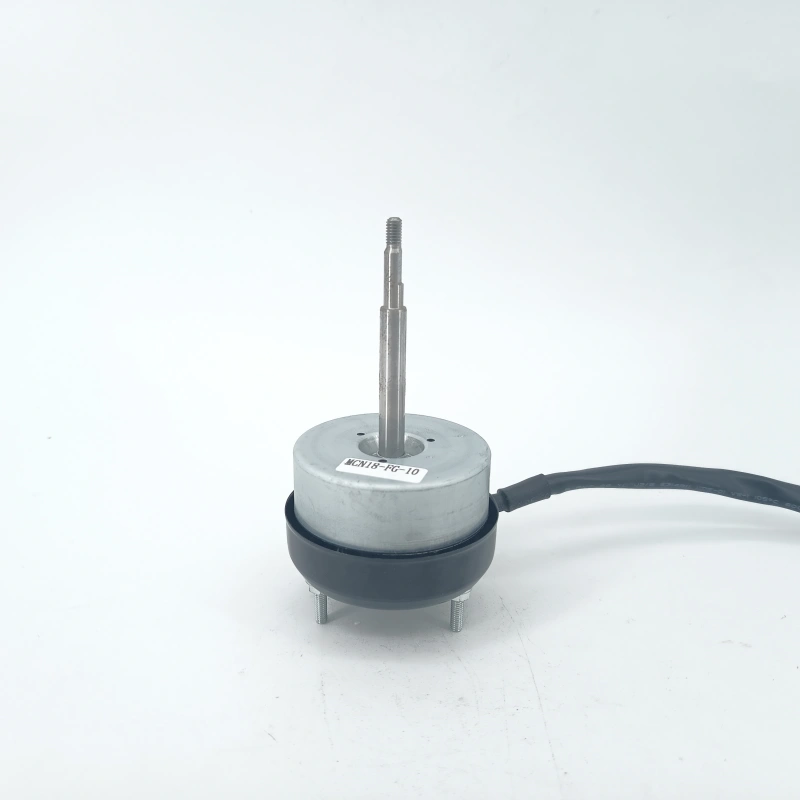
DC motors are widely used in industrial automation, rail transit, household appliances and other fields due to their excellent speed regulation performance and large starting torque. However, the problem of unstable speed frequently occurs in actual operation, which not only affects the processing accuracy and production efficiency of equipment, but also may shorten the service life of the motor. Therefore, clarifying the core causes of speed fluctuation and formulating targeted solutions are of great significance to ensure the stable operation of equipment.
I. Core Causes of Unstable Speed of DC Motors
The speed of a DC motor follows the formula n = (U – IaRa)/(CeΦ) (where n is the speed, U is the armature voltage, Ia is the armature current, Ra is the armature resistance, Ce is the motor constant, and Φ is the excitation flux). The essence of speed fluctuation is caused by abnormal changes in one or more parameters in the formula. Combined with actual operating scenarios, the core causes can be divided into three categories: mechanical faults, electrical abnormalities and control system problems.
1. Mechanical Structure Faults: Abnormalities in Transmission and Support Systems
Mechanical faults are the most intuitive incentives. Firstly, bearing wear or damage: after long-term operation, the bearing balls are worn and the cage is broken, which will cause the rotor to be eccentric, increase the rotation resistance, and make the speed fluctuate. Secondly, uneven air gap between the armature and the stator: assembly errors or long-term vibration will lead to inconsistent air gap, causing unbalanced magnetic flux distribution, which in turn affects the stability of electromagnetic torque. Thirdly, excessive load fluctuation: for example, the sudden change of cutting amount during machine tool processing and the accumulation of materials in conveying equipment will cause the motor load torque to increase instantaneously, and the armature current Ia will rise sharply. According to the speed formula, the speed will decrease accordingly, resulting in fluctuation.
2. Electrical System Abnormalities: Circuit and Component Faults
The electrical system is the energy foundation for the operation of the motor, and its abnormalities directly affect the stability of parameters. Problems in the armature circuit are the most common. For example, inter-turn short circuit of the armature winding will lead to the failure of part of the winding, reduce the effective conductor area, and make Ia increase and unstable. Poor contact between the commutator and the brush: due to brush wear, insufficient spring pressure or oxidation of the commutator surface, the contact resistance will fluctuate, causing the armature voltage U to fluctuate. Faults in the excitation circuit are also critical. In separately excited DC motors, open circuit or poor contact of the excitation winding will cause the magnetic flux Φ to drop sharply, and the speed will increase instantaneously (risk of “runaway”). In shunt-excited motors, changes in the resistance of the excitation circuit will make Φ unstable, which in turn causes speed fluctuations. In addition, power supply voltage fluctuation is also an important factor. If the voltage of the power supply system is unstable, it will directly cause changes in U, and the speed will fluctuate accordingly.
3. Control System Problems: Failure of Speed Regulation and Feedback
Modern DC motors mostly rely on control systems to achieve precise speed regulation, and faults in the control system will directly cause speed problems. Firstly, abnormalities in the speed regulation device: for example, in the thyristor speed regulation system, faults in the trigger circuit lead to unstable conduction angle of the thyristor and abnormal armature voltage regulation. Secondly, failure of the feedback link: faults in the speed feedback sensor (such as tachogenerator, encoder) make it impossible to accurately collect speed signals, and the control system cannot adjust the output according to the actual speed, leading to the speed deviating from the set value. Thirdly, defects in the control algorithm: if the PID algorithm parameters adopted by the control system are not properly tuned, the adjustment response to speed fluctuations is delayed or overshot, and stable control cannot be achieved.
II. Targeted Solutions
1. Optimize Mechanical Structure to Reduce Physical Interference
For mechanical faults, a regular maintenance mechanism needs to be established: regularly check the operation status of the bearing, replace it in time if wear or abnormal noise is found, and add lubricating grease as required to reduce frictional resistance; accurately calibrate the armature and stator to ensure uniform air gap, and strictly control errors during assembly; optimize the load design, add buffer devices (such as clutches, reducers) at the load end to avoid instantaneous load impact, and at the same time reasonably match the motor power with the load demand to prevent overload operation.
2. Troubleshoot the Electrical System to Ensure Energy Stability
Troubleshooting of the electrical system should be carried out step by step: first, detect the power supply voltage, and ensure that the power supply voltage is stable within the allowable range by installing a voltage stabilizer or a voltage monitoring device; second, check the armature and excitation circuit, use a multimeter and a megohmmeter to detect the insulation of the winding, troubleshoot inter-turn short circuit and open circuit problems, polish the commutator, replace worn brushes, and adjust the spring pressure to ensure good contact; finally, regularly check electrical components (such as contactors, fuses) and replace aging components in time to reduce the risk of circuit faults.
3. Improve the Control System to Achieve Precise Regulation
Optimizing the control system is the core to solve the unstable speed: regularly calibrate the speed regulation device, check key components such as the trigger circuit and thyristor to ensure accurate armature voltage regulation; replace the faulty speed feedback sensor, select a sensor with higher precision and stronger anti-interference ability (such as photoelectric encoder), and strengthen the installation and fixation of the sensor to reduce vibration interference; optimize the control algorithm, adjust the PID parameters through on-site debugging to improve the response speed and regulation precision of the system to speed fluctuations, and if necessary, introduce an adaptive control algorithm to realize dynamic adjustment for different working conditions.
III. Summary
The unstable speed of DC motors is the result of the combined action of multiple factors including mechanics, electricity and control. It is necessary to formulate solutions from the dual dimensions of “hardware maintenance + system optimization”. By establishing a regular maintenance mechanism, accurately troubleshooting the root causes of faults, and optimizing control strategies, the speed stability of the motor can be effectively improved, the service life of the equipment can be prolonged, and the reliability of industrial production and equipment operation can be guaranteed. In practical applications, it is also necessary to combine the specific conditions such as motor model and operating conditions to realize accurate positioning and efficient solution of problems.