Thai
Thai  English
  French
  German
  Spanish
  Portuguese
  Dutch
Dutch  Italian
  Russian
  Chinese
  Japanese
  Korean
  Indonesian
  Vietnamese
  Arabic
  Turkish
  Hebrew
  Hindi
Hindi 

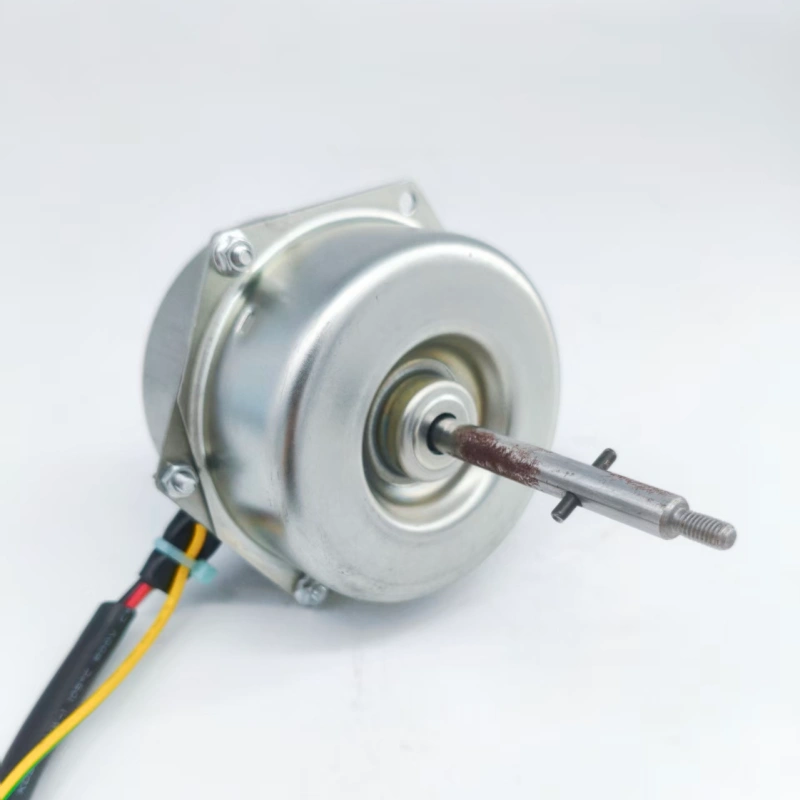
Normally, DC motors of the same power level are indeed more expensive than AC motors.
This is mainly determined by their structural complexity, material costs, and manufacturing processes.
Specifically, there are several core reasons:
1. Complex structure: commutator and electric brush
This is the fundamental reason.
A DC motor requires a mechanical device called a commutator for operation.
AC motor (mainly referring to induction motor): The structure is very simple.
It is usually composed of an internal rotor (usually a squirrel cage cast aluminum rotor) and an external stator (silicon steel sheet with copper wire winding).
The manufacturing process has a high degree of automation and is relatively easy.
DC motor: In addition to the stator and rotor windings, there must also be a commutator.
The commutator is a cylindrical body composed of many mutually insulated copper sheets, installed on the rotor.
At the same time, electric brushes need to slide on the commutator to conduct current.
2. Use of permanent magnets
Many small DC motors use permanent magnets to generate a magnetic field (instead of relying on energized coils like AC motors).
Material cost: High performance permanent magnet materials (such as neodymium iron boron) are very expensive and have large price fluctuations.
Although this eliminates the need for excitation windings, in many application scenarios, the cost of permanent magnets exceeds that of copper wires and silicon steel sheets.
3. Limitations on heat dissipation and volume
The commutator and brushes of a DC motor are located on the rotor (rotating part), making it difficult for heat to dissipate.
To ensure reliable operation under limited temperature rise, more effective materials (larger magnets, thicker wires) are often required to reduce heat generation, which further increases costs.
4. Production scale
Although DC motors are still widely used in modern industry, AC induction motors, especially standardized three-phase asynchronous motors, are the most widely used and produced motors in the world’s industry.
The huge output has brought about extreme cost sharing and mature and efficient automated production lines, resulting in a very low unit price for AC motors.
In contrast, the production scale of DC motors is smaller, making it difficult to achieve the same cost-effectiveness.
Exception situations need to be noted:
When it comes to brushless DC motors, the situation will be different.
Brushless DC motors remove the commutator and brushes, and their structure is very similar to permanent magnet synchronous AC motors.
The cost of the brushless DC motor is between that of brushed DC and AC asynchronous motors (because it uses permanent magnets, has high material costs, but relatively simple structure).
However, brushless DC motors must be equipped with an electronic controller to function.
If the total cost of the motor and controller is added up, it is often higher than that of a simple AC motor.
But its performance and efficiency are much higher than traditional brushed DC motors.