Dutch
Dutch  English
  French
  German
  Spanish
  Portuguese
  Italian
  Russian
  Chinese
  Japanese
  Korean
  Indonesian
  Thai
Thai  Vietnamese
  Arabic
  Turkish
  Hebrew
  Hindi
Hindi 

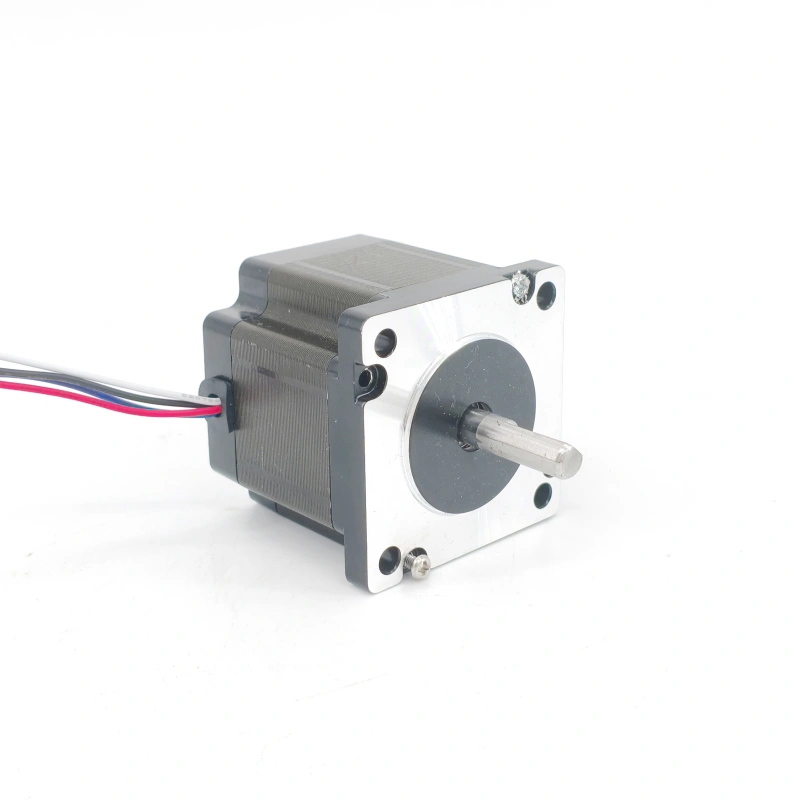
This is a very professional industrial control problem.
The core working principle of a DC driver, also known as a DC speed regulator, can be summarized as: controlling the speed and torque of a DC motor by adjusting the average voltage applied to both ends of the motor armature.
1、 Basic principle: Speed equation of DC motor
The speed (n) of a DC motor is determined by the following formula:
n = (U – Ia * Ra) / (Ke * Φ)
n: Motor speed
U: Voltage applied to both ends of the armature
Ia: Armature current
Ra: Armature resistance
Ke: Motor constant
Φ: Excitation magnetic flux (magnetic field strength)
From this formula, it can be seen that there are three basic methods to change the rotational speed n:
Voltage regulation control: Changing the armature voltage U. This is the most commonly used and cost-effective method, with a wide speed range and strong mechanical characteristics.
Magnetic control: Changing the excitation magnetic flux Φ. Usually used for constant power speed regulation above rated speed (weak magnetic acceleration).
Series resistance control: changing the resistance Ra of the armature circuit. This is the oldest and least efficient method, but it has been largely eliminated.
Modern DC drivers mainly use “voltage regulation control” as the core speed control method.
2、 Core structure: How to achieve “voltage regulation”?
Modern DC drives no longer use bulky generators or transformers for voltage regulation, but instead use power electronics technology.
Its core is a controllable rectifier circuit (chopper).
The main components of a driver include:
Power input module: Connect AC power (single-phase or three-phase).
Rectifier bridge: rectifies alternating current into unstable direct current.
Filter circuit: Make the DC power smooth.
Core power switching devices (IGBT or thyristor): This is the heart of the driver.
It is like a high-speed switch, conducting and turning off direct current at extremely high frequencies (up to several kilohertz).
Control circuit (microprocessor/DSP): This is the brain of the driver.
It receives speed/torque commands from the control panel, PLC, or upper computer, as well as actual motor speed feedback signals from encoders and speed generators.
Drive/isolation circuit: amplifies the weak current signal of the control circuit to safely drive high-power switching devices.
3、 Working principle and control process: PWM (Pulse Width Modulation) technology
Modern DC drivers commonly use PWM (Pulse Width Modulation) technology to achieve voltage regulation.
Image metaphor: Imagine a faucet that switches on and off at high speed hundreds or thousands of times per second.
If you only let the water flow for 0.5 seconds and turn it off for 0.5 seconds within 1 second, then the average flow rate is half of when it is fully open.
PWM technology is based on this principle.
Specific process:
Setting and feedback: Users set a target rotational speed.
The microprocessor (CPU) inside the drive simultaneously receives this set value and the actual speed feedback value from the motor encoder.
Calculation error: The deviation (error) between the set value and the feedback value calculated by the CPU.
PID regulation: This error signal is operated by a PID (proportional integral derivative) controller.
The function of a PID controller is to intelligently determine how to adjust the output to quickly, smoothly, and accurately eliminate errors.
Generate PWM signal: Based on the output of PID, the CPU generates a PWM control signal.
The frequency of this signal is fixed, but the width (duty cycle) of the pulse can be changed.
Duty cycle=pulse conduction time/entire cycle time.
Power switch action: PWM signal drives power switching devices (such as IGBT).
A high duty cycle results in a longer conduction time for the switch within one cycle;
A small duty cycle results in a shorter conduction time.
Output variable average voltage: After being “chopped” by switching devices, the DC bus voltage is “chopped” into a series of square wave pulses.
Due to the large inductance of the motor armature, it smooths out these pulses.
Finally, an average voltage is obtained at both ends of the armature.
This average voltage V_avg=bus voltage x duty cycle.
When high speed is required, the CPU increases the duty cycle → the average voltage rises → the motor accelerates.
When low speed is required, the CPU reduces the duty cycle → the average voltage decreases → the motor decelerates.
Closed loop control: The motor speed changes due to voltage changes, and the encoder immediately feeds back the new speed to the CPU. The CPU then calculates and adjusts it again, forming a closed-loop control loop that keeps the motor speed stable near the set value and unaffected by load changes.