English
  French
  German
  Spanish
  Portuguese
  Dutch
Dutch  Italian
  Russian
  Chinese
  Japanese
  Korean
  Indonesian
  Thai
Thai  Vietnamese
  Arabic
  Turkish
  Hebrew
  Hindi
Hindi 

Among summer cooling equipment, pedestal fans have become a must-have for most families due to their portability, low energy consumption, and wide application scenarios. However, the market is flooded with a wide variety of pedestal fans, ranging from basic mechanical models to intelligent remote-controlled ones, and from regular wind types to multi-dimensional oscillating ones, with significant differences in parameters and functions. Many consumers tend to fall into the misunderstandings of “only focusing on appearance” or “blindly pursuing high-end models” when purchasing. To select a pedestal fan that suits family needs and balances performance and comfort, it is necessary to comprehensively consider core parameters, functional design, usage scenarios, etc. Detailed answers are as follows.
I. Core Parameters: Determining the Basic Performance of Pedestal Fans
Core parameters directly affect the wind power, energy consumption, and service life of pedestal fans, making them the primary consideration for purchase.
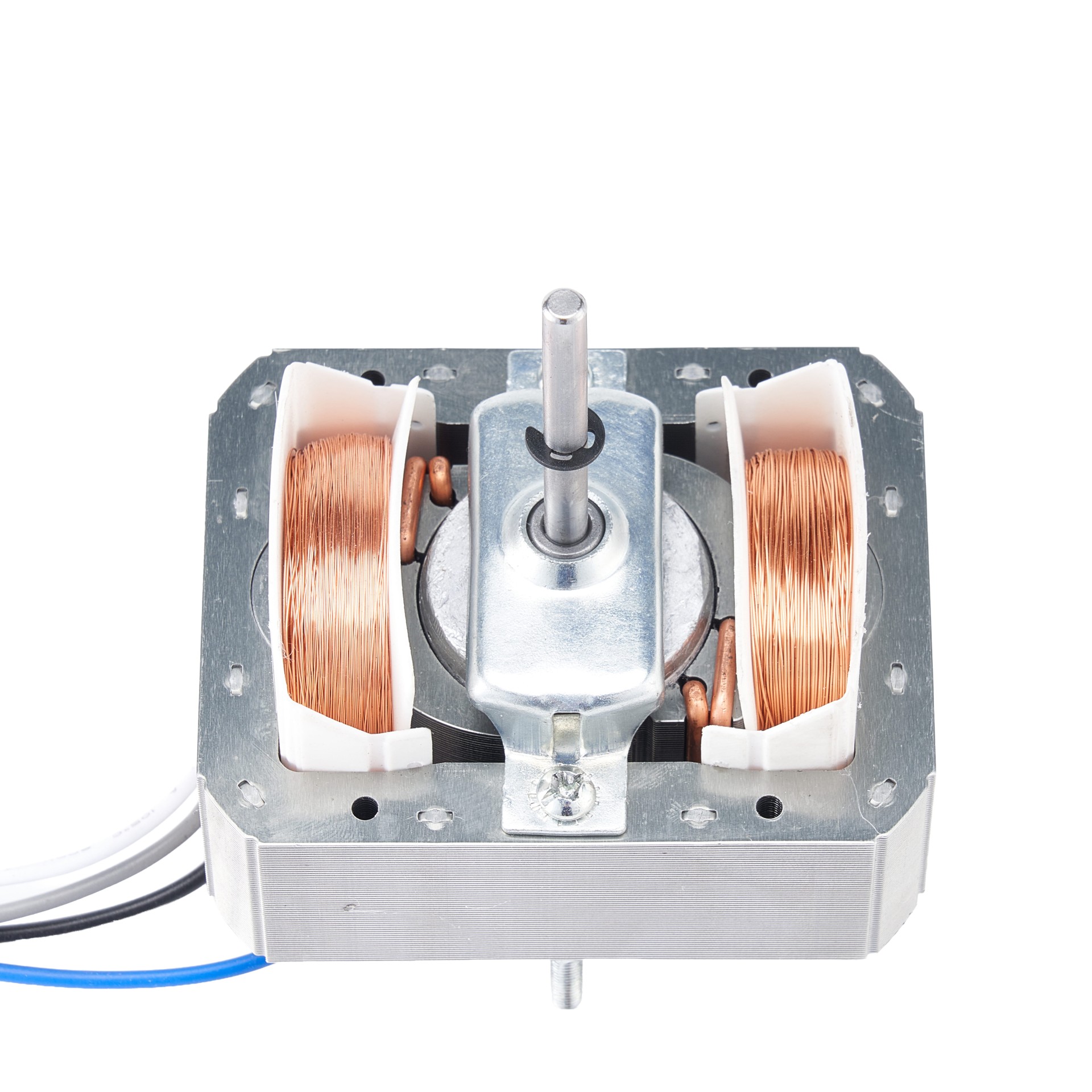
First, consider the motor type and power. The motor is the “heart” of a pedestal fan. It is recommended to choose a pure copper motor, which has good thermal conductivity, low loss, low noise, and a longer service life. Compared with aluminum wire motors, it is more stable and durable in long-term use, suitable for families that use it frequently. In terms of power, the power of household pedestal fans usually ranges from 30W to 60W, and there is no need to blindly pursue high power—for small spaces such as bedrooms and studies, 30W to 40W is sufficient for cooling and more energy-efficient; for large spaces such as living rooms, 40W to 60W can be selected for wider wind coverage. Meanwhile, pay attention to whether the motor is equipped with an overheating protection function, which can effectively avoid potential safety hazards caused by long-term operation.
Second, look at the wind speed gears and wind type design. Basic pedestal fans usually have 3 to 5 wind speed settings, which can meet daily needs such as “low wind for sleep, medium wind for cooling, and high wind for heat relief”. Wind type design affects comfort. In addition to regular direct wind, models with natural wind, sleep wind, and soft wind modes are more recommended: natural wind simulates outdoor wind changes to avoid discomfort caused by continuous direct blowing; sleep wind can automatically adjust wind speed at night, gradually reducing it to adapt to changes in human body temperature during sleep and reduce the risk of catching cold; soft wind models convert hard wind into delicate and soft wind through grid optimization or wind deflector design, suitable for the elderly, children, and sensitive groups.
Finally, consider the oscillation range and wind speed stability. The oscillation function of a pedestal fan determines the wind coverage area. Traditional left-right oscillation angle is mostly 90°, while some high-end models support 120° wide-angle oscillation, and some are equipped with up-down tilting adjustment, which can realize the circulation of air in the whole room and avoid local cooling and stuffiness in corners. Wind speed stability is also crucial. High-quality pedestal fans operate with uniform wind speed without obvious fluctuations, and run without noise at low gears, which will not affect rest.
II. Functional Design: Adapting to Scenarios and Usage Convenience
The functional design of pedestal fans should fit the actual family usage scenarios, balance convenience and safety, and avoid redundant functions increasing costs.
The control method should be suitable for the user group. Mechanical models are operated by knobs and levers, featuring simple structure, low failure rate, and affordable price, suitable for the elderly; remote-controlled models support long-distance operation, eliminating the need to get up to adjust gears and wind speed, suitable for bedrooms, living rooms, and other scenarios; intelligent models can be connected to mobile phone APPs or voice control, supporting scheduled on/off, wind speed reservation, and other functions, suitable for young families pursuing convenient experiences. It should be noted that for remote-controlled models, confirm the battery life—some models are equipped with rechargeable batteries, which can get rid of the constraint of power supply and be more flexible to move.
Timer function and safety design should not be ignored. The timer function can avoid energy waste caused by forgetting to turn off the fan. The regular timer range is 1 to 8 hours. Setting a 2 to 4-hour timer during sleep can both cool down and save electricity. In terms of safety, fan blades should be made of ABS material, which has high toughness and is not easy to break. Meanwhile, the gap of the protective net should be less than 1 cm to prevent children and pets from touching and getting injured; the base should be heavy and stable with a low center of gravity to avoid tipping over during operation. Some models are equipped with anti-slip pads on the base to further improve safety.
In addition, cleaning convenience should also be considered. Pedestal fans will accumulate dust after a period of use, affecting wind power and hygiene. Choose models with detachable grids and fan blades, which can be wiped easily without complex tools, reducing subsequent maintenance troubles.
III. Scenario Adaptation: Precise Selection Based on Space and Needs
Different families have different needs for pedestal fans due to varying space sizes and user groups, so targeted selection is required.
Small space adaptation: For spaces of 10-20 square meters such as bedrooms and studies, prioritize slim and lightweight pedestal fans to avoid occupying too much space. Meanwhile, low-noise models are preferred to ensure no impact on sleep and work. Soft wind models with sleep wind mode can be selected to improve night use comfort.
Large space adaptation: For spaces over 20 square meters such as living rooms and dining rooms, choose pedestal fans with strong wind power and wide oscillation range to ensure wind coverage of the entire space. For open spaces, models with slightly higher power and diverse wind types can be selected, combined with wide-angle oscillation function to realize full-house air circulation and avoid local stuffiness.
Special group adaptation: When there are elderly people, children, or people with sensitive respiratory systems at home, prioritize soft wind pedestal fans to avoid headaches and colds caused by direct blowing; meanwhile, choose odorless and environmentally friendly models to reduce the release of harmful substances such as formaldehyde and ensure health. For families with pets, select models with dense protective nets and stable bases to prevent pets from touching the fan blades or tipping over the fan.
IV. Pitfall Reminder: Avoid Blind Following
Avoid the misunderstandings of “the higher the power, the better” and “the more functions, the more practical” when purchasing. Some high-power pedestal fans, although with strong wind, have high energy consumption and noise, suitable for large public places rather than household use; redundant functions such as ambient lights and Bluetooth speakers will increase the price and failure rate if not just needed, resulting in low cost performance. Meanwhile, avoid choosing cheap and low-quality models, which mostly use aluminum wire motors, with high noise, short service life, and lack of safety protection design, posing potential safety hazards.
In summary, the core of choosing a pedestal fan is “adapting to needs”: first confirm core parameters such as motor and wind power, then select control methods and functional designs according to usage scenarios and groups, and balance safety and convenience. In this way, you can choose a cost-effective, comfortable, and durable pedestal fan to easily cope with summer heat.