French
  English
  German
  Spanish
  Portuguese
  Dutch
Dutch  Italian
  Russian
  Chinese
  Japanese
  Korean
  Indonesian
  Thai
Thai  Vietnamese
  Arabic
  Turkish
  Hebrew
  Hindi
Hindi 

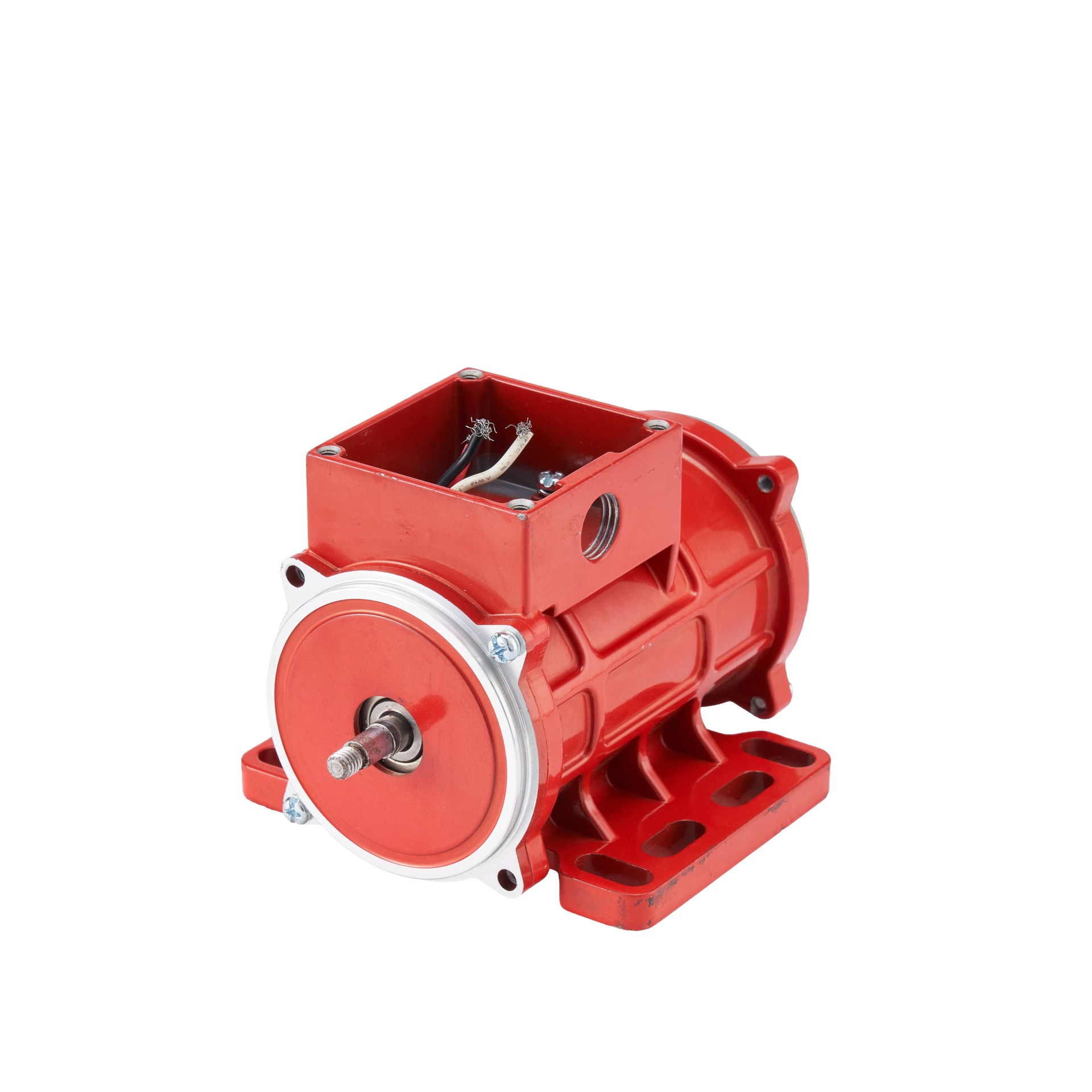
The core principle of using a battery as a DC power source to drive an AC motor is inversion. You need a device called an inverter, which is responsible for converting the DC power output from the battery into the AC power required by the motor
Option 1: Use electronic inverters (mainstream solution)
This is currently the most efficient and commonly used method, widely used in fields such as electric vehicles, solar power generation, and portable power sources.
Core working principle: The core of the inverter is a set of high-speed switch “electronic switches” (such as IGBT or MOSFET).
The control circuit (such as DSP chip) will precisely control the fast on/off of these switches, cutting the DC power into segments of pulses.
Through a technique called pulse width modulation (PWM), the width of the pulse can be adjusted, filtered, and finally formed into a smooth sine wave AC power to drive the motor.
Key functional modules: A practical motor drive system typically includes the following parts:
DC-DC converter (optional): If the battery voltage does not match the required voltage of the motor, this circuit needs to be used to first increase or decrease the battery voltage to an appropriate value.
Inverter bridge circuit: an “H-bridge” or three-phase bridge circuit composed of power switching devices (such as IGBT), responsible for converting DC power into AC power.
Controller: Typically a microcontroller (MCU) or digital signal processor (DSP).
It calculates and sends PWM control signals in real-time based on user instructions (such as speed) and motor feedback (such as current and position), achieving precise speed and torque control of the motor.
Drive and sampling circuit: responsible for amplifying the signal of the controller to drive the power switch, and monitoring the voltage and current in real time to provide protection and control basis for the controller.
Option 2: Mechanical converter (niche solution)
This is a relatively “retro” creative method that uses the alternating on-off of mechanical contacts to change the direction of current flow.
Working principle: Imagine a fast switching switch driven by a micro motor.
When the switch is turned to the left, current flows forward through the motor;
When turned to the right, the current flows in reverse through the motor.
By controlling the frequency of this switch to switch back and forth, alternating current can be generated.
Its principle is similar to the reverse operation of the brush and commutator in a DC motor.
Advantages and disadvantages: Its advantages are simple principle, possibly low cost, and theoretically capable of handling large amounts of power.
But the disadvantages are also obvious: mechanical contact switching will generate electric sparks, resulting in energy loss and contact wear, so the reliability and lifespan are far inferior to electronic solutions, and currently only suitable for a few special occasions.