English
  French
  German
  Spanish
  Portuguese
  Dutch
Dutch  Italian
  Russian
  Chinese
  Japanese
  Korean
  Indonesian
  Thai
Thai  Vietnamese
  Arabic
  Turkish
  Hebrew
  Hindi
Hindi 

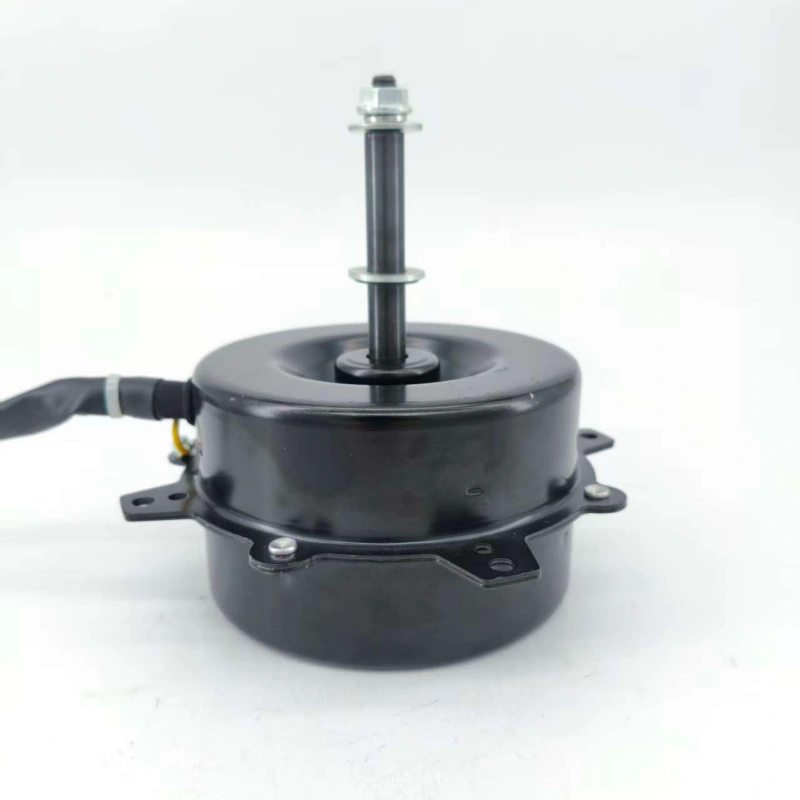
Water-cooled fans (also known as evaporative air coolers) have become a popular choice for summer cooling due to their advantages of energy saving, fluorine-free operation, and wide air supply range. However, they are not suitable for all scenarios, as their cooling effect is closely related to ambient humidity and usage methods. Blind selection may fail to achieve the expected cooling effect, and even cause problems such as moisture regain and uncomfortable body feeling. Below, we will detail the key points for selecting and using water-cooled fans based on scenario characteristics.
Working Principle of Water-Cooled Fans
First, clarify the working principle of water-cooled fans: the internal water pump delivers water to the wet curtain, and the fan drives air through the wet curtain, using water evaporation to absorb heat and reduce air temperature, while increasing air humidity. Therefore, its cooling effect relies on a “low-humidity environment”, with core advantages in dry areas and shortcomings in high-humidity environments.
Suitable Application Scenarios
In terms of suitable scenarios, water-cooled fans are more suitable for dry and well-ventilated spaces. For example, most northern regions (such as Beijing, Xi’an, Lanzhou, etc.) have a dry climate in summer, with relative air humidity usually between 40% and 60%. When using a water-cooled fan, the cooling range can reach 5-8℃. At the same time, moderately increasing air humidity can also alleviate skin tightness, respiratory discomfort and other problems caused by dryness. It is very suitable for large-area spaces such as family living rooms, bedrooms, offices, and factory workshops. In addition, outdoor open-air scenarios (such as food stalls, temporary construction site rest areas) can also use industrial-grade water-cooled fans, which can not only cool down but also supply air without complex installation.
Unsuitable Application Scenarios
However, water-cooled fans are not recommended for use in high-humidity scenarios. In the southern plum rain season and coastal areas (such as Shanghai, Guangzhou, Shenzhen, Qingdao, etc.), the relative air humidity in summer often exceeds 70%, and even reaches more than 80% in some humid weather. Using a water-cooled fan at this time will further increase air humidity, making it difficult for water to evaporate, resulting in a weak cooling effect (only 1-2℃). It will also cause indoor walls, furniture, and electrical appliances to get damp and moldy, making clothes difficult to dry. At the same time, high-humidity environments are prone to breeding bacteria and mites, affecting human health. In addition, water-cooled fans are strictly prohibited in humidity-sensitive spaces such as precision instrument rooms, archives, and calligraphy and painting collection rooms to avoid moisture damage to equipment and deterioration of collections.
Key Points for Selection and Use
In addition to scenario adaptation, the following points should be noted for the correct selection and use of water-cooled fans to maximize their cooling effect and extend their service life.
First, select the specification according to the space size. For household scenarios, prioritize water-cooled fans with an air volume of 100-200 cubic meters per hour, suitable for rooms of 15-30 square meters; living rooms and small offices can choose models with an air volume of 200-300 cubic meters per hour; industrial workshops and large venues need to select industrial-grade water-cooled fans with an air volume of more than 500 cubic meters per hour to ensure that the air volume covers the entire space. At the same time, prioritize models with automatic water tank replenishment and detachable and washable wet curtains to reduce daily maintenance costs.
Second, keep ventilation during use. Even in a dry environment, it is necessary to open windows for ventilation when using a water-cooled fan to timely discharge humid air and avoid indoor humidity accumulation. Using it for a long time with doors and windows closed will lead to increased local humidity, reduced cooling efficiency, and may even cause moisture regain. It is recommended to open windows for ventilation for 10-15 minutes every 2-3 hours of use to maintain air circulation.
Third, do a good job in daily maintenance. Regularly clean the wet curtain and water tank, at least once a week, to avoid scaling and bacterial growth, which affects the air supply hygiene; it is recommended to add purified water or filtered tap water to the water tank to reduce scaling and extend the service life of the water pump and wet curtain; when not in use for a long time, drain the water in the water tank, dry the wet curtain before storage to prevent mold and odor.
Fourth, use with other equipment to improve the effect. When used in dry areas, it can be used with fans to assist air supply and expand the cooling range; when the sun is strong during the day, draw the curtains to reduce heat intake, then turn on the water-cooled fan for better cooling effect. It should be noted that water-cooled fans cannot be used in a closed space with air conditioners at the same time. Air conditioners cool the air and discharge moisture, which conflicts with the humidification function of water-cooled fans, not only increasing energy consumption but also possibly affecting the service life of the equipment.
In summary, water-cooled fans are not “universal cooling artifacts”, and are mainly suitable for dry and well-ventilated scenarios, while high-humidity and humidity-sensitive scenarios should be avoided. Selecting the right specification according to space size and ambient humidity, and ensuring good ventilation and maintenance during use, can give full play to their energy-saving and cooling advantages and bring a comfortable user experience.